
US Israel Iran conflict by Sojworldnews Staff
Date: 28 February 2026
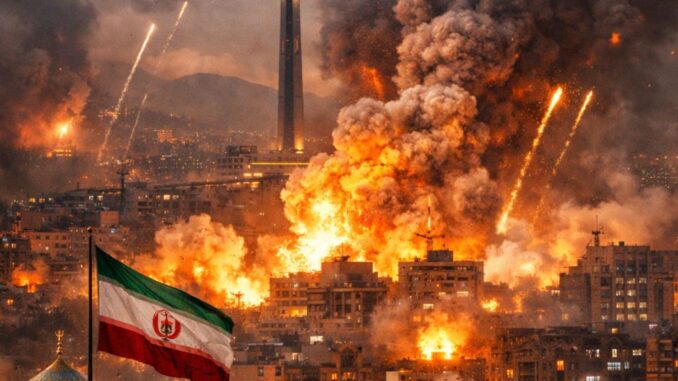
In a dramatic escalation of tensions in the Middle East, the United States and Israel launched coordinated military strikes on Iran today. The strikes targeted key military bases, nuclear-related facilities, and strategic infrastructure across Tehran and other major cities. According to Iranian state media, the attacks resulted in the death of Supreme Leader Ayatollah Ali Khamenei and several senior military commanders, marking a historic and volatile moment in regional politics.
US Israel Iran conflict: Immediate Strikes and Retaliation
The offensive, called “Operation Epic Fury” by the United States and “Operation Lion’s Roar” by Israel, aimed to prevent what officials described as an existential threat from Tehran. Explosions rocked Tehran, and Iranian air defenses responded vigorously.
In retaliation, Iran launched missile and drone strikes targeting Israeli territory and U.S. military installations in Bahrain, Qatar, Kuwait, and the UAE. Consequently, Israel declared a state of emergency, mobilized reservists, and temporarily suspended civilian activities. Meanwhile, U.S. forces remain on high alert in the region, although no casualties have been reported.
SEE ALSO,
BREAKING: Seyi Tinubu Breaks Silence, Denies Involvement in VeryDarkMan, King Mitchy Dispute
BREAKING: Gospel Singer Taiwo Adegbodu of Adegbodu Twins Dies
Diplomatic and Global Reactions
United Nations Response
At an emergency UN Security Council meeting, Secretary-General António Guterres condemned the attacks. He warned that continued hostilities could trigger a wider regional war. The U.S. and Israel defended the strikes as lawful and preventive, while Iran labeled them war crimes.
International Leaders
- China and Russia urged all parties to respect Iran’s sovereignty and halt military actions immediately.
- European nations and the Arab League called for diplomatic dialogue to de-escalate tensions.
- Airlines suspended flights and restricted airspace over Gulf regions, impacting international travel and raising concerns about global oil supplies.
Civilian Impact and Regional Consequences
The ongoing conflict threatens civilian populations, infrastructure, and essential services. Analysts predict sharp increases in oil prices and shipping costs, as Gulf sea lanes face disruption. Governments worldwide are closely monitoring the situation to prevent further escalation.
This confrontation represents one of the most significant direct military engagements between the United States, Israel, and Iran in decades. Unlike previous proxy conflicts, today’s events demonstrate a new level of intensity and immediacy in regional tensions.
Looking Ahead
As both sides continue military actions, the world faces uncertainty. Diplomatic interventions may yet prevent a larger-scale war, but the death of Iran’s Supreme Leader and senior commanders signals a turning point that could reshape the Middle East.

Leave a Reply