
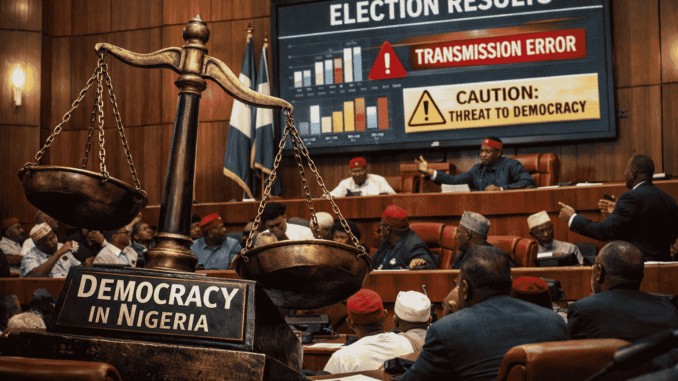
Senate Decision Sparks Fresh Electoral Debate
Afenifere reacted after the Senate declined to make electronic transmission of results mandatory in the ongoing amendment of the Electoral Act. According to the group, the decision weakens transparency and opens the door for electoral manipulation.
In a statement signed by its leaders, Oba Oladipo Olaitan and Prince Justice Faloye, Afenifere said the Senate chose political convenience over national interest.
The group stressed that credible elections depend on real-time electronic transmission of results from polling units.
SEE ALSO,
2027 Elections: Senate Did Not Reject E-Transmission, Says Coalition
SDP: Nigerians Demand Law for Electronic Transmission of Election Results
Ijoba Lande Alleges Police Brutality, Theft in Lagos
House of Reps Audit Report Indicts Six FCT Area Councils Over N100bn Financial Infractions
“A Dangerous Path for Democracy” – Afenifere
Afenifere warned that the Senate’s action could push Nigeria towards a one-party state. It argued that removing compulsory electronic transmission benefits only the ruling elite.
According to the group, electronic transmission remains one of the strongest tools to curb rigging and restore public trust in elections.
“Any attempt to weaken this process amounts to an assault on constitutional democracy,” the statement noted.
Growing Concerns Ahead of 2027 Elections
The Senate’s position has continued to attract criticism from opposition parties, civil society organisations, and election observers.
Many Nigerians fear that without mandatory electronic transmission, election results may once again face disputes, delays, and allegations of manipulation.
Despite claims by some lawmakers that electronic transmission still exists in the law, critics insist that the absence of clear and compulsory language creates uncertainty.
Call for Immediate Reversal
Afenifere urged the National Assembly to urgently reverse the decision and clearly mandate electronic transmission of results.
The group also called on Nigerians to remain vigilant and defend democratic reforms.
As the Electoral Act amendment progresses, stakeholders believe the final outcome will shape the credibility of Nigeria’s elections in the years ahead.
Sojworldnews will continue to follow developments surrounding electoral reforms and democratic accountability in Nigeria.
Leave a Reply