
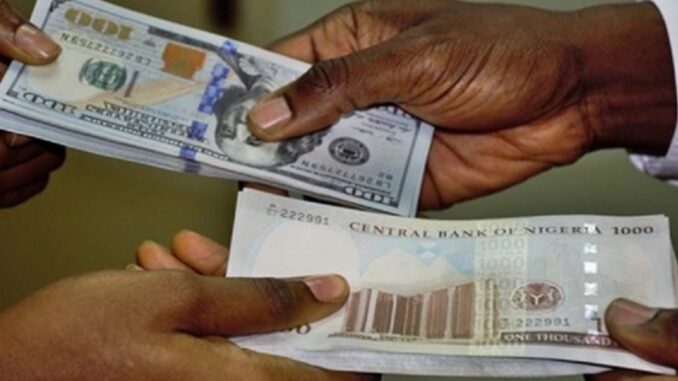
Exchange Rates Saturday April 4, 2026, Nigeria – The Nigerian foreign exchange market continues to reflect moderate volatility across the official and parallel market windows.
The naira trades within a narrow band in the official market, while the parallel market remains slightly higher due to demand pressure and limited foreign exchange supply.
Funke Akindele Reveals the Only Actor Who Makes Her ‘Tremble’ on Set
Exchange Rates April 4 2026 Nigeria: Exchange Rates Table
| Currency | Official Market Rate (₦) | Parallel / Black Market Rate (₦) | Mid-Market / Indicative Rate (₦) |
|---|---|---|---|
| US Dollar (USD) | ₦1,370 – ₦1,385 | ₦1,445 – ₦1,460 | ₦1,430 |
| Euro (EUR) | ₦1,500 – ₦1,520 | ₦1,670 – ₦1,700 | ₦1,690 |
| British Pound (GBP) | ₦1,790 – ₦1,820 | ₦1,960 – ₦2,000 | ₦1,980 |
| Chinese Yuan (CNY) | ₦188 – ₦192 | ₦198 – ₦205 | ₦200 |
| Japanese Yen (JPY) | ₦10.2 – ₦10.5 | ₦10.9 – ₦11.2 | ₦11.0 |
| Canadian Dollar (CAD) | ₦1,010 – ₦1,030 | ₦1,080 – ₦1,100 | ₦1,090 |
| Swiss Franc (CHF) | ₦1,500 – ₦1,520 | ₦1,600 – ₦1,630 | ₦1,615 |
| Saudi Riyal (SAR) | ₦365 – ₦370 | ₦385 – ₦390 | ₦388 |
| UAE Dirham (AED) | ₦368 – ₦372 | ₦388 – ₦392 | ₦390 |
Market Notes
The official rate reflects transactions within the Central Bank of Nigeria regulated foreign exchange market.
The parallel market rate represents Bureau de Change and street trading rates across major cities.
The mid-market rate is a global benchmark used by international financial platforms and does not include transaction charges.
Exchange rates may change during the day depending on demand, supply, and liquidity in the foreign exchange market.
Stay with Sojworldnews for daily exchange rate updates and business news.
Leave a Reply