
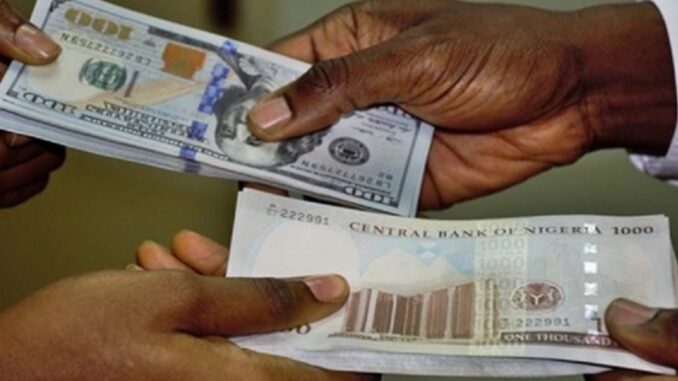
Nigeria Exchange Rates – Monday, April 6, 2026, the Nigerian foreign exchange market shows moderate stability across major currencies.
The naira traded within a narrow band in the official market, while the parallel market recorded slightly higher rates due to demand pressure.
7 Killed, Several Kidnapped As Terrorists Attack Churches In Kaduna During Easter Celebrations
Nigeria Exchange Rates April 6 2026: Exchange Rates Table
| Currency | Official Market Rate (₦) | Parallel / Black Market Rate (₦) | Mid-Market / Indicative Rate (₦) |
|---|---|---|---|
| US Dollar (USD) | ₦1,380.79 | ₦1,400 – ₦1,420 | ₦1,393 |
| Euro (EUR) | ₦1,591.92 | ₦1,590 – ₦1,620 | ₦1,589 |
| British Pound (GBP) | ₦1,824.86 | ₦1,870 – ₦1,910 | ₦1,820 |
| Chinese Yuan (CNY) | ₦200.29 | ₦202 – ₦205 | ₦200 |
| Japanese Yen (JPY) | ₦8.64 | ₦8.65 – ₦8.80 | ₦8.64 |
| Canadian Dollar (CAD) | ₦990 | ₦1,007 – ₦1,022 | ₦988 |
| Swiss Franc (CHF) | ₦1,724.57 | ₦1,725 – ₦1,740 | ₦1,724 |
| Saudi Riyal (SAR) | ₦367.55 | ₦368 – ₦375 | ₦368 |
| UAE Dirham (AED) | ₦375.80 | ₦378 – ₦385 | ₦376 |
Market Notes
The official rate reflects transactions within the Central Bank of Nigeria (CBN) regulated foreign exchange market.
In contrast, the parallel market rate represents Bureau de Change and open market trading across major Nigerian cities.
Meanwhile, the mid-market rate is the global benchmark used by international financial platforms and does not include local transaction charges or market premiums.
Exchange rates change during the day based on demand, supply, and liquidity conditions. Therefore, readers should confirm rates before making foreign exchange transactions.
Stay with Sojworldnews for daily exchange rate updates, business news, and economic insights.
Leave a Reply