
A $20 Billion Investment That Promised National Transformation
When Aliko Dangote invested more than $20 billion to build Africa’s largest refinery, it marked a historic moment for Nigeria. The Dangote Refinery promised fuel self-sufficiency, job creation, stable prices, and freedom from fuel import dependency.
Instead, the dream is under threat.
Dangote’s Alarm: A Cry Born of Resistance, Not Emotion
Today, Dangote is sounding the alarm. His outcry is not sudden, emotional, or careless. It is the voice of a major investor facing deliberate resistance from the very system meant to protect local industry.
Early Sabotage and the Blocked ₦600 Petrol Price
From the beginning, obstacles appeared. At an early stage, authorities blocked the refinery from selling petrol at ₦600 per litre. That price could have eased the suffering of millions of Nigerians. Rather than support local refining, powerful interests chose to frustrate it.
Import Licenses and the Business of Fuel Dependency
Despite having the capacity to meet Nigeria’s entire domestic fuel demand, import licenses continue to be issued. These approvals benefit individuals and companies closely linked to political power. As a result, substandard fuel keeps entering the country—not out of necessity, but for profit.
Where Responsibility Truly Lie
Let us be honest.
No single regulator issues import licenses alone. Every approval follows a chain of authority. At the top of that chain sits one man.
Nigeria’s Minister of Petroleum is Asiwaju Bola Tinubu.
Nigeria’s President is Asiwaju Bola Tinubu.
Responsibility cannot be outsourced.
Economic Reform or Modern-Day Economic Colonialism?
While the government speaks of reform, its actions undermine local investment and protect rent-seeking cartels. Even more troubling is the gradual transfer of Nigeria’s tax and revenue systems to foreign interests. Many see this as modern economic colonialism and a direct threat to national sovereignty.
A Nation That Feels Under Captivity
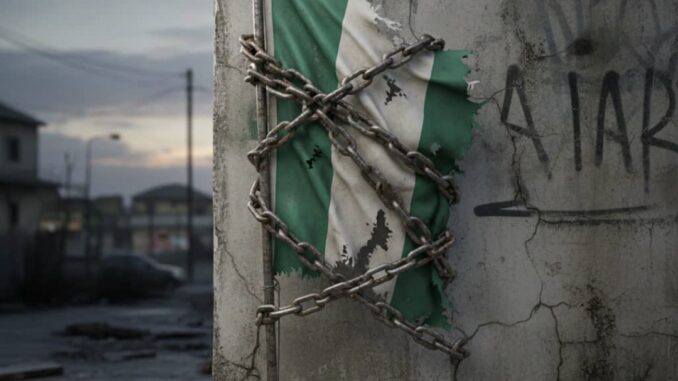
Nigeria no longer feels like a free republic. It feels like a nation under captivity.
Dangote did not go public without trying private channels. This public warning reflects desperation, not drama. His refinery is being choked deliberately, despite its national importance.
Structured Economic Sabotage, Not Policy Failure
This is not policy failure. It is structured economic sabotage—a system designed to thrive on imports, chaos, and dependency. Under the APC-led government, this structure has deepened, and Nigeria’s economy continues to bleed.
Nigeria does not lack capacity.
Nigeria lacks courage at the top.
The Question Nigeria Must Confront
Until these exploitative structures collapse, Dangote’s cry will echo the cries of millions of Nigerians—ignored, unheard, and betrayed.
How long will Nigeria remain in captivity?
Leave a Reply