
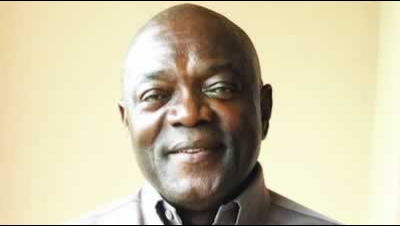
Orkar Coup Actor Tony Nyiam: International Cooperation is Important, But Not Enough
Nyiam began by acknowledging the importance of international cooperation in tackling insecurity. He referenced ongoing diplomatic engagements between Nigeria and global powers, particularly recent engagements involving Bola Ahmed Tinubu and the United Kingdom. According to him, such collaborations are timely and strategically relevant within the broader context of global security cooperation and intelligence sharing.
SEE ALSO,
Controversy Trails Alleged “Rape Festival” in Ozoro Community, Delta State. WATCH VIDEO
Eid Mubarak: Prince Adesoji Masilo Adeleke Felicitates With Muslims After Ramadan
“The President’s speech was one of the best I have listened to in recent times. It was well-researched, it was properly communicated, and it represented Nigeria in a dignified manner before the international community. In today’s interconnected world, you cannot isolate yourself. We need partners, we need cooperation, and we need shared intelligence in dealing with global threats that are increasingly interconnected and transnational in nature,” Nyiam stated.
However, he stressed that international partnerships cannot substitute for fixing internal weaknesses in Nigeria’s security framework. He described the exclusion of citizens from the country’s security structure as a major flaw.
“Having said that, the work has to be done by we, the Nigerians. And that is where I have a major concern. The Nigerian people themselves have not been meaningfully integrated into the present national security architecture, and as long as that structural disconnect continues, we will keep struggling with the same cycle of insecurity,” he said.
Nyiam argued that the current system alienates local populations from defending their own communities. As a result, intelligence gathering suffers, trust between civilians and security agencies erodes, and response times to crises are significantly delayed.
“What we have today is a structure that, in many respects, behaves like an army of occupation rather than a people-oriented security system. You deploy troops to territories where they have no cultural, linguistic, or social connection, and then you expect them to gather intelligence effectively and respond with precision. It doesn’t work that way,” he added.
He further alleged that the existing structure is vulnerable to internal compromise, citing divided loyalties and intelligence leaks as recurring problems that undermine operations.
“The present arrangement is such that it is compromised. When you have individuals within the system whose loyalty is not entirely to the Nigerian state but to other interests, you create a situation where operational plans are leaked, intelligence is compromised, and the enemy is always a step ahead,” Nyiam stated.
Nyiam Pushes for Armed Regional Security, Warns Against Misusing Police
Expanding on his proposals, Nyiam advocated a decentralised, multi-layered security system comprising federal forces, state-based formations, and locally rooted defence units operating in coordination.
“What we need is a proper, well-defined national security architecture that reflects the diversity and complexity of Nigeria as a federation. There should be federal forces, state-level forces, and local community-based units that act as first responders. Security must become truly everybody’s business,” he said.
He made a strong case for strengthening and formally arming regional security outfits such as Amotekun. According to him, Nigeria risks worsening its security crisis if it continues to rely solely on conventional federal forces and an overstretched police system.
Nyiam also cautioned against confusing the role of the police with that of the military, stressing that the police are not equipped for combat operations against insurgents or heavily armed groups.
“We must not make the mistake of confusing the role of the police with that of the military. The police is a civil force… It is not trained, equipped, or structured to engage in full-scale combat operations,” he explained.
He warned that militarising the police could lead to serious consequences for democracy and civil liberties.
“If you begin to turn the police into a combat force, then you are gradually creating a police state. That is not what we need as a democratic society,” he cautioned.
Reiterating his support for regional outfits, Nyiam highlighted their advantage in intelligence gathering and community engagement due to their local composition.
“Amotekun is a step in the right direction, but it has been deliberately limited in its operational capacity. These are people who understand their environment… yet, they are not allowed to carry the kind of arms that would make them truly effective,” he said.
He insisted that with proper legal backing, structured training, and oversight, such forces could significantly improve grassroots security.
“Let them be armed legally, let them be properly trained, and let them operate within a clearly defined framework. If you do that, you will see a significant improvement,” he added.
Drawing comparisons with global models, Nyiam cited the United States’ National Guard system as an example of effective decentralised security.
“In the United States, each state has its National Guard… That model allows for flexibility, local ownership of security, and rapid mobilisation,” he noted.
He also referenced the January 6 United States Capitol attack, pointing to how local forces played a role in restoring order during the crisis.
In conclusion, Nyiam maintained that Nigeria’s security challenges cannot be resolved through piecemeal reforms. Instead, he called for a comprehensive restructuring that prioritises local participation, accountability, and coordinated operations across all levels of government.
“Until we address the structural foundation of our security challenges, we will continue to go round in circles. It is not just about changing strategies or leadership; it is about changing the system itself,” he concluded.
Leave a Reply