
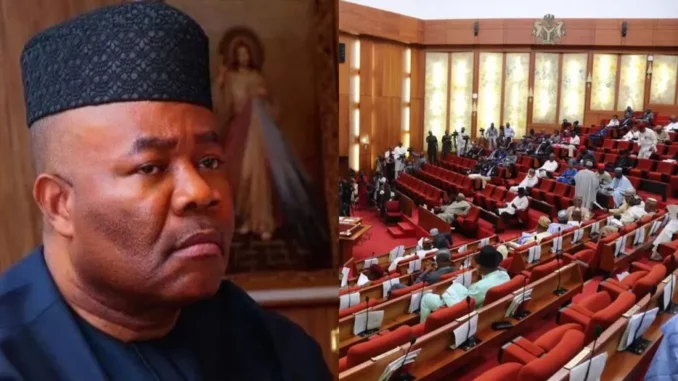
Abuja, Nigeria – The Nigerian Senate has strongly defended its amendment to the Electoral Act. According to the Senate spokesperson, Senator Yemi Adaramodu, lawmaking requires patience and deep reflection. Therefore, he said the process “is not like eating amala.”
He made this remark while responding to growing criticism from Nigerians. In recent days, many citizens have questioned the Senate’s position on electronic transmission of election results.
Senate Says It Followed Due Process
First, Adaramodu explained that lawmakers examined every clause carefully. In addition, they debated the bill extensively on the Senate floor. As a result, he said the chamber reached its decision after thorough consideration.
“We do not play to the gallery,” he stated. “Instead, we act in the best interest of Nigeria.”
Furthermore, he noted that democracy allows different opinions. For this reason, the Senate listened to stakeholders before finalising the amendment.
SEE ALSO,
Troops Kill 16 ISWAP Fighters, Rescue 11 Kidnapped Civilians in Borno
Sen. Seriake Dickson: “Real-Time” Clause Not Needed for Transparent Elections
Electronic Transmission Remains Key Issue
Meanwhile, the main controversy centres on electronic transmission of election results.
Initially, the Senate rejected real-time electronic transmission. However, after public reactions intensified, lawmakers reviewed the provision. Subsequently, they introduced a revised clause.
Now, the amendment allows the Independent National Electoral Commission (INEC) to transmit results electronically to its Result Viewing Portal (IReV).
However, the law does not make real-time transmission mandatory. Instead, electoral officers will rely on the signed Form EC8A as the official document for collation.
According to the Senate, this decision reflects Nigeria’s technological realities. Moreover, lawmakers say they want to prevent technical failures that could disrupt elections.
Public Reactions Intensify
Nevertheless, many Nigerians remain dissatisfied. For example, civil society groups have staged protests in Abuja. Likewise, some opposition figures have demanded compulsory real-time transmission.
They argue that manual collation creates loopholes. Consequently, they fear possible manipulation during elections. In addition, activists insist that Nigeria must strengthen electoral transparency before the 2027 general elections.
Senate Calls for Patience
Despite the criticism, the Senate maintains its position. Adaramodu stressed that drafting laws requires time and responsibility. In particular, lawmakers must consider legal, technical, and security implications.
Therefore, he urged Nigerians to remain patient. Above all, he asked citizens to trust the legislative process.
What Happens Next
Next, the Senate and the House of Representatives will harmonise their versions of the bill. Afterward, the National Assembly will forward the final document for presidential assent.
Meanwhile, debate continues across the country. As 2027 approaches, electoral reform remains a critical national issue.
SEO Details
Focus Keyphrase: Electoral Act Amendment Nigeria
SEO Title: Senate Defends Electoral Act Amendment, Says Lawmaking Not Like Eating Amala
Slug: senate-defends-electoral-act-amendment-nigeria-2026
Meta Description: The Nigerian Senate defends its Electoral Act amendment, saying lawmaking is not like eating amala. Debate continues over electronic transmission ahead of the 2027 elections.
Leave a Reply