
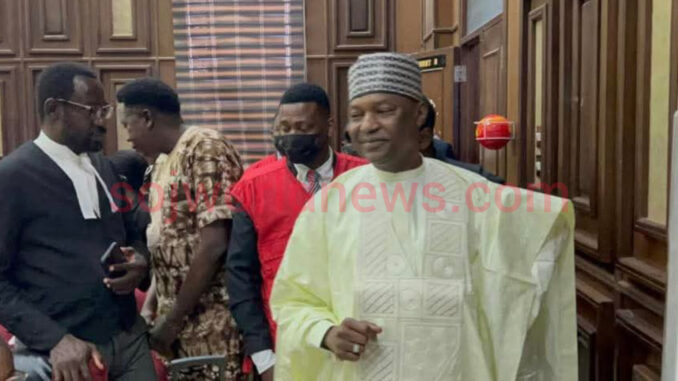
Malami Freed on ₦500M Bail — Former Attorney‑General and Minister of Justice Abubakar Malami has been granted ₦500 million bail. The decision has shocked legal experts and political observers nationwide. Justice Emeka Nwite delivered the Malami bail ruling at the Federal High Court in Abuja on January 7, 2026. Read more.
What Parents Didn’t Expect: Nestlé Baby Formula Recall Triggers Global Safety Panic
The Malami bail order also covers his wife, Hajia Bashir Asabe, and his son, Abdulaziz Malami. The trio faces 16 counts of alleged money laundering involving billions of naira. Legal observers say this case is one of the most high-profile anti-corruption trials in recent Nigerian history.
Malami Freed on ₦500M Bail: What the Malami Bail Means
Each defendant must pay ₦500 million with two credible sureties. The sureties must provide verifiable landed property in Abuja. Defendants must also surrender their international passports before release. These strict conditions aim to prevent flight risk and ensure trial integrity.
Justice Nwite warned that any attempt to interfere with the judicial process outside proper channels will be punished. Observers say this reflects the court’s determination to maintain transparency in a high-stakes case.
Malami Freed on ₦500M Bail: Background of the Charges
Malami and the co-accused pleaded not guilty in December 2025. They are accused of hiding and laundering nearly ₦8.7 billion through bank accounts, companies, and real estate transactions in Abuja, Kano, and Kebbi State. EFCC claims the funds were illicitly acquired and improperly concealed.
Before the Malami bail ruling, the trio was remanded at Kuje Correctional Centre while their bail application was under review. Their release has generated nationwide debate over accountability and legal rights for high-profile figures.
Reactions and Next Steps
Analysts say the Malami bail decision highlights the tension between pre-trial rights and public demand for accountability. Legal experts note the court balanced constitutional liberties with strict supervision in sensitive cases.
The trial is set to continue with further hearings on the substantive charges. Many Nigerians are watching closely, viewing this case as a benchmark for high-level accountability in Nigeria.
Leave a Reply