
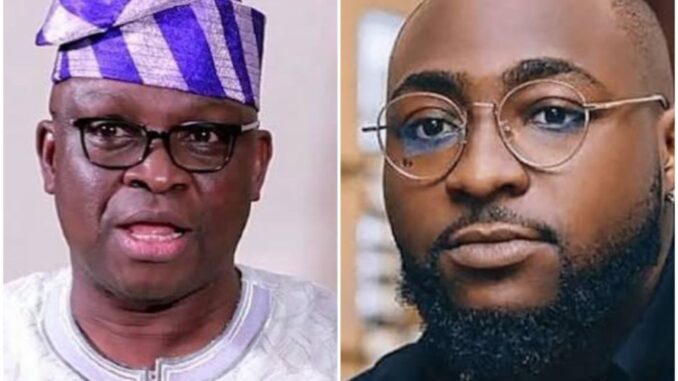
Fayose Accord ₦40 billion Osun election, SOJWORLDNEWS
Fayose Accord ₦40 billion Osun election — Former Ekiti State Governor, Ayodele Fayose, has waded into the war of words trailing the Osun State governorship election. This time, he is turning the spotlight on his own party. In a recent Corridor Chat interview, Fayose alleged that the Accord Party spent nothing less than ₦40 billion to secure victory. The August 15 poll, he said, was expensive for both sides. His comments come days after Afrobeats star Davido claimed the APC deployed over ₦110 billion in a failed vote-buying bid.
Consequently, Fayose’s remarks complicate the narrative Davido had pushed since results were declared. Davido insisted,
“We didn’t spend a dime on election day.”
Fayose, however, painted a different picture. He suggested that heavy spending came from both camps, not one side alone. Therefore, instead of echoing Davido’s account, the former governor chose to interrogate the money behind the contest.
Beyond the spending allegations, Fayose also questioned the results from Ede. Ede is the ancestral base of the Adeleke family. According to him, the margin there looked unusually convenient. The race, he noted, appeared tightly contested elsewhere in the state. As he put it,
“It was a keenly contested election, which ordinarily, for Ede, would have gone either way.”
Consequently, he urged Nigerians to scrutinise how the Ede figures were compiled. He wants the numbers checked before anyone accepts them at face value.
Meanwhile, Fayose stopped short of dismissing Adeleke’s victory. Instead, he called for magnanimity. He urged the governor to reconcile with all stakeholders, not just Accord loyalists. He also stressed that peace matters more than political score-settling. Notably, this measured tone contrasts with his sharper claims about campaign spending.
On vote buying, Fayose is not alone. His younger brother, Isaac Fayose, had earlier accused the APC of spending roughly ₦60 billion. He asked pointedly,
“They bought votes worth about 60 billion.”
He then questioned where such funds came from. Together, both allegations suggest vote buying shaped the entire contest. It was not confined to one party, they argue.
Still, nobody has independently verified these figures. INEC has not commented on the alleged spending. Neither Accord nor the APC has released an official breakdown of campaign costs. For now, the claims remain allegations. Even so, they add fresh urgency to long-standing concerns about money’s grip on Nigerian elections.
Ultimately, Fayose’s intervention shifts the conversation. It moves from a single-party blame game to a broader indictment of Nigeria’s electoral culture. Rather than let Davido’s claims stand unchallenged, he has pushed observers to examine spending on both sides. Moreover, his comments on Ede reinforce a familiar pattern. Local results often attract fresh scrutiny long after collation ends.
Going forward, the Osun election will likely remain a reference point ahead of 2027. It tested APC’s grip on the Southwest in a real way. For now, though, the numbers cited by Fayose, Davido, and Isaac Fayose tell their own story. Money, it seems, still shapes Nigerian politics, no matter who wins at the polls.
Leave a Reply