
Kindly send your name and location ONLY to this WhatsApp Number 09069473894 to receive our daily news updates.
READ ALSO: TIMI Frank, Frankly Lying – JOSEF ONOH
FORMER Southeast Spokesman to President Bola Ahmed Tinubu has reacted to Bello Abdullahi’s piece, “Wike, Abuja and the Death of Modesty in Power,” where he painted a vivid picture of moral decline in Nigerian governance, with Nyesom Wike, the Minister of the Federal Capital Territory, as its central antagonist.
The article invokes nostalgia for a bygone era of selfless leaders like Shehu Shagari and Abubakar Koko, contrasting their restraint with Wike’s alleged land allocations to relatives.
While Abdullahi’s call for ethical leadership is compelling, his narrative oversimplifies Wike’s tenure, ignores his tangible achievements, and leans heavily on unverified claims.
A closer examination reveals a leader whose bold, results-driven approach differs starkly from the restraint of past figures but is not without merit in Nigeria’s complex political landscape.
Wike’s Record: Action Over Symbolism
Abdullahi’s critique hinges on Wike’s supposed lack of modesty, particularly in the alleged allocation of public land to his family.
Yet, this narrative sidesteps Wike’s transformative impact as FCT Minister, which deserves equal scrutiny. Unlike the era of Shagari, where symbolic modesty defined leadership, Nigeria in 2025 faces urgent developmental challenges—sprawling urban decay, infrastructure deficits, and administrative inefficiencies in Abuja. Wike’s tenure has been marked by aggressive action to address these issues.
Since assuming office, he has spearheaded the revitalization of key infrastructure projects, including the rehabilitation of over 135 roads across the FCT, the completion of the Abuja Metro Line extension, and the enforcement of urban planning regulations to curb illegal settlements.
These are not the actions of a minister preoccupied with personal enrichment but of one committed to reshaping Abuja into a functional capital.
Compare this to Shagari’s era, where the focus was on laying foundational plans for Abuja’s development. Shagari’s restraint, while admirable, operated in a less complex Nigeria, where the capital’s development was nascent, and public expectations were modest. Wike, by contrast, governs in an era of heightened scrutiny, rapid urbanization, and economic strain.
His pragmatic, often unapologetic approach—seen in his demolition of illegal structures and swift project execution—reflects a leadership style suited to these demands, even if it lacks the quiet nobility Abdullahi extols.
READ ALSO: OSOGBO-IWO Highway In A Sorry State, State Govt Reacts (PHOTO NEWS PLUS DETAILS)
I wish to draw clarify the ongoing issue of the land allocation debate and it’s Context Matters, Abdullahi’s central charge—that Wike allocated public land to his father and relatives—lacks specificity and risks sensationalism without evidence.
While such allegations warrant investigation, they must be substantiated beyond anecdotal outrage. Land allocation in the FCT is governed by the Land Use Act of 1978 and FCT guidelines, which grant the minister discretionary powers to allocate land for public or private use.
If Wike’s allocations were within legal bounds, as Abdullahi concedes they might be, the critique shifts from illegality to morality—a subjective terrain. Unlike Shagari or Koko, who operated in a less scrutinized era with fewer competing interests, Wike navigates a system where land is a contentious asset, often tied to political patronage and economic survival.
Moreover, Abdullahi’s comparison to Shagari’s modesty overlooks the systemic differences. Shagari’s era lacked the intense land speculation that defines Abuja today, where demand for plots far outstrips supply.
READ ALSO: BUHARI; SOLDIER, STATESMAN, STRUGGLER By Dare Babarinsa, CON
Wike’s alleged allocations, if true, may reflect a pragmatic response to political realities—rewarding loyalty or stabilizing alliances—rather than outright greed. This is not to excuse ethical lapses but to highlight that governance in 2025 demands navigating a web of interests that Shagari’s simpler era did not face. Wike’s predecessors, including Mohammed Abba Gana, operated in a less pressured environment, where land was abundant and less commodified.
I can only draw a case of Modesty vs. Effectiveness as a false dichotomy
Abdullahi’s lament for modesty in power assumes that restraint equates to effective governance.
Yet, Nigeria’s history shows that modesty alone does not guarantee progress. Leaders like Shagari, while principled, presided over administrations criticized for inefficiency and economic stagnation.
Wike, by contrast, has a track record of delivering results—first as Governor of Rivers State, where he transformed Port Harcourt’s infrastructure, and now in Abuja, where his projects are visible and measurable. His brash style, often interpreted as arrogance, is arguably a necessary tool in a system where indecision and timidity can stall progress.
READ ALSO: INSIDE LIFE: WOMAN Blinded by Pregnancy Complications Tragically Loses Baby (READ FULL EMOTIONAL STORY)
Take the example of Nasir El-Rufai, another FCT Minister Abdullahi references. El-Rufai was known for his aggressive reforms, including demolitions and land revocations, which earned him both praise and criticism.
Like Wike, he prioritized impact over popularity, a trait that contrasts with the understated modesty of Shagari or Koko. Yet, El-Rufai’s tenure is widely regarded as a turning point for Abuja’s development. Wike’s approach, while less diplomatic, mirrors this focus on results.
His revocation of undeveloped plots and enforcement of master plan compliance demonstrate a commitment to public interest, even if his methods invite controversy. I know so from a first hand experience as the pioneer two time Executive chairman of Enugu capital territory development authority which in discharge of my mandate I had to put service before emotions and my reward was criticism from all quarters but the most important thing was I got the job done and left behind a positive legacy in the Ugwuanyi led administration.
In my opinion, the Silence Abdullahi deplores is rather a misdiagnosis because Abdullahi argues that Nigeria’s silence in the face of Wike’s actions reflects a decline in public morality.
But this overlooks the broader context of public fatigue. Nigerians are not silent because they endorse excess but because they are overwhelmed by systemic challenges—corruption, insecurity, and economic hardship.
Wike’s visibility as a minister who delivers tangible projects, from roads to public buildings, may explain why allegations against him do not spark widespread outrage. The public prioritizes outcomes over symbolic gestures, a shift from Shagari’s era, where symbolic integrity was enough to sustain trust.
Furthermore, Abdullahi’s call for modesty risks romanticizing a past that was not without flaws. Shagari’s administration, while restrained, was marred by allegations of corruption among associates, and Koko’s era saw the seeds of bureaucratic inefficiencies that later plagued the FCT.
Wike’s unapologetic style, while jarring, is a response to a Nigeria where public trust is won through visible action, not just moral posturing.
Finally,Wike is not Shagari, nor should he be. The Nigeria of 2025 demands leaders who can navigate a fractured system, deliver results, and withstand intense scrutiny.
Wike’s achievements—roads rehabilitated, metro lines extended, and urban planning enforced—stand in stark contrast to the inertia of less assertive leaders.
While allegations of land allocations demand transparency and accountability, they should not overshadow his contributions. Abdullahi’s nostalgia for modesty is understandable, but it risks ignoring the complexities of modern governance. Wike’s legacy, like El-Rufai’s, may ultimately be judged not by his restraint but by the tangible progress he leaves behind.
In a nation desperate for development, Wike’s pragmatism, however imperfect, offers a counterpoint to the quiet nobility of the past. The question is not whether we should expect modesty but whether we can demand both ethics and effectiveness in equal measure.
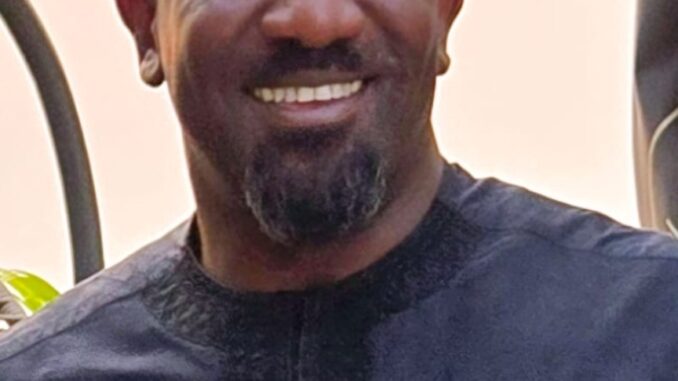
Denge. Dr. Josef Onoh mih.uk is the former Southeast Spokesman to President Bola Ahmed Tinubu.
READ ALSO: EFCC Raises Alarm Over Fake Airlines PROMO Online To Defraud Unsuspecting Nigerians
CALL 08023851511 to kick-start business relationship with us for your Documentary, Advert, PR, Publicity, Awareness, Interviews, Feature Stories, Press Release/Statement, Documentary and so on.
Leave a Reply