
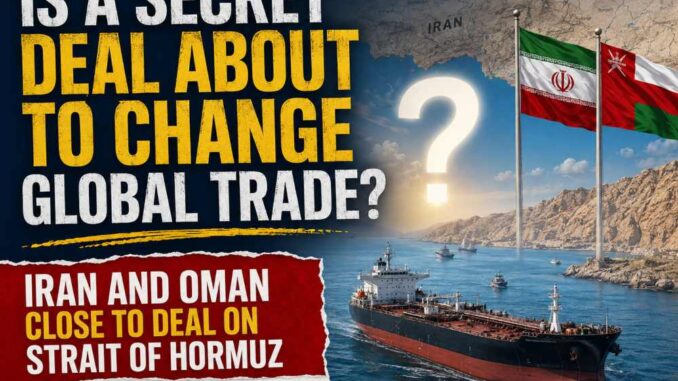
Iran and Oman are reportedly on the verge of a technical agreement to manage shipping through the Strait of Hormuz, but Tehran is making clear that any deal with Muscat will not, by itself, reopen the waterway to global traffic.
Where Things Stand
Oman’s foreign ministry described recent negotiations with Iran as constructive, and Iranian Foreign Minister Abbas Araghchi said the two sides are nearing an understanding on managing the strait. According to Araghchi, the emerging arrangement would allow vessels to transit via a temporary route until a new permanent shipping corridor — replacing the pre-war “Traffic Separation Scheme” — can be negotiated and formally established.
The strait has been effectively closed to foreign shipping since late February, when Iran shut it down in response to US-Israeli strikes that killed Supreme Leader Ali Khamenei and marked the start of the current war. Some vessels have since transited under US Navy escort, but the broader chokepoint — a critical route for oil exports from Saudi Arabia, Iraq and Kuwait — remains disrupted.
The Catch
Iran is drawing a sharp distinction between a technical shipping-management deal with Oman and a genuine reopening of the strait. Araghchi has said reopening remains conditional on separate demands, including compensation from Washington, and that those conditions have been relayed to US officials through intermediaries. Iranian officials have also accused the US of trying to establish alternative routes that undercut Tehran’s control over the waterway.
On the American side, Vice President JD Vance has framed the ongoing talks as focused on maximizing oil and gas flow through Hormuz to lower US energy prices, and has pushed back on the idea that Iran is instead trying to tighten its grip on the strait.
Why It Matters
The Strait of Hormuz remains one of the most closely watched flashpoints to emerge from the war, given its role as the primary artery for Gulf oil exports. Any formal Iran-Oman agreement would be a step toward de-escalation, but Tehran’s insistence on additional US concessions means a genuine reopening — and the market relief that would come with it — may still be some way off.
What to Watch Next
- Whether Iran and Oman formally sign the shipping-route agreement in the coming days
- Any signal from Washington on the compensation terms Tehran is seeking
- Oil market movement tied to reopening expectations
- Further statements from Araghchi or Gharibabadi on the status of indirect US-Iran contacts
Leave a Reply