
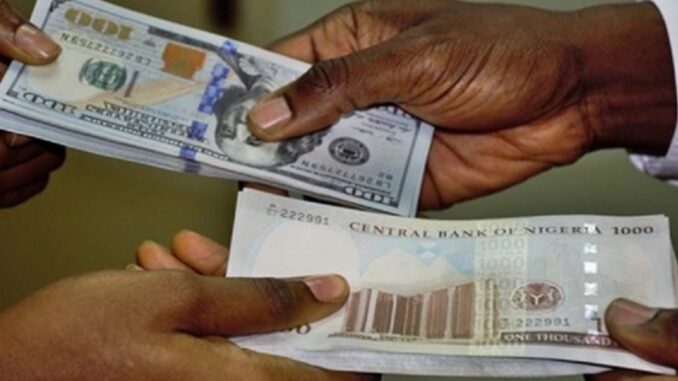
Exchange Rates as of Monday, February 23, 2026, the Nigerian foreign exchange market reflects the latest variations in rates. Below are the official, parallel, and mid-market rates for the most commonly traded currencies.
SEE ALSO,
BREAKING: Assistant Commissioner of Police in Borno State Dies in Fatal Auto Crash
Exchange Rates Table
| Currency | Official Market Rate (₦) | Parallel / Black Market Rate (₦) | Mid-Market / Indicative Rate (₦) |
|---|---|---|---|
| US Dollar (USD) | ₦1,375 – ₦1,385 | ₦1,460 – ₦1,475 | ₦1,470 |
| Euro (EUR) | ₦1,495 – ₦1,510 | ₦1,670 – ₦1,710 | ₦1,705 |
| British Pound (GBP) | ₦1,800 – ₦1,820 | ₦1,960 – ₦2,000 | ₦1,975 |
| Chinese Yuan (CNY) | ₦190 – ₦195 | ₦200 – ₦205 | ₦202 |
| Japanese Yen (JPY) | ₦10.2 – ₦10.5 | ₦10.9 – ₦11.2 | ₦11.0 |
| Canadian Dollar (CAD) | ₦1,020 – ₦1,040 | ₦1,090 – ₦1,110 | ₦1,100 |
| Swiss Franc (CHF) | ₦1,490 – ₦1,510 | ₦1,590 – ₦1,610 | ₦1,600 |
| Saudi Riyal (SAR) | ₦365 – ₦370 | ₦385 – ₦390 | ₦388 |
| UAE Dirham (AED) | ₦370 – ₦375 | ₦390 – ₦395 | ₦393 |
Market Notes
The official rate is set by the Central Bank of Nigeria (CBN) for official transactions. The parallel market rate represents rates from Bureau de Change (BDC) and street-level trading. The mid-market rate is a global benchmark used by international platforms and excludes local premiums.
Rates fluctuate throughout the day due to demand, supply, and liquidity. Please verify with your bank or BDC before making any transactions.
Stay with Sojworldnews for verified daily updates, business news, and economic insights.
Leave a Reply