
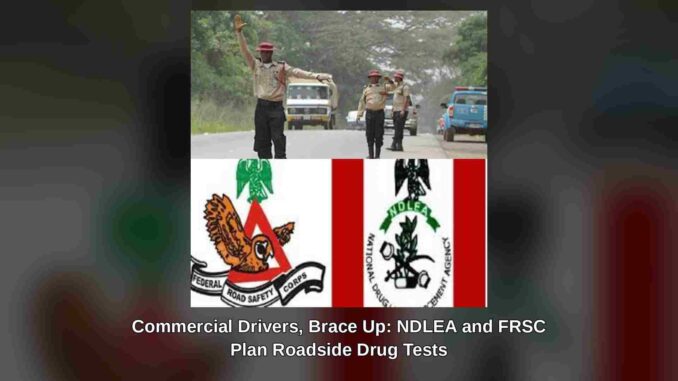
The National Drug Law Enforcement Agency (NDLEA) and the Federal Road Safety Corps (FRSC) plan to introduce a drug test for commercial drivers across Nigeria. The two agencies want to cut road crashes that drug abuse causes. If the plan takes effect, drivers could face checks on the highway and before they even apply for a licence.
NDLEA Chairman Buba Marwa outlined the idea in September 2025. Umoru Ambrose, a Deputy Commandant General of Narcotics, represented him at the event. According to Marwa, the two agencies are finalising a Memorandum of Understanding that would formalise drug integrity tests for drivers. He said the NDLEA has completed its part and now awaits the FRSC’s input.
Marwa explained why the agency pushes for the measure. Years of research, he said, show that drug abuse plays a significant role in accidents on most Nigerian highways. Therefore, the NDLEA has been working closely with the FRSC. Marwa described both agencies as “partners in progress,” because the FRSC handles road safety and rescue while the NDLEA tackles the root causes of crashes.
The plan relies on trained officers. The NDLEA says it has already trained professionals who will, in turn, train FRSC officials to carry out on-the-spot drug tests. As a result, patrol teams could screen drivers during routine highway operations. Moreover, the agency says drivers should undergo testing before they apply for a licence, which would add a check at the very start of the process.
Passengers could also face screening. Marwa said the collaboration would let NDLEA and FRSC operatives assess both drivers and passengers during joint operations on the highways. However, officials have not explained how passenger tests would work in practice. They have also not said whether passengers could refuse.
The agency aims its message squarely at commercial drivers. Marwa stated plainly, “we don’t like commercial drivers on our roads indulging in drugs or alcohol.” He said the measure would deter drivers who consume alcohol or psychoactive substances while on duty. In addition, a separate report quoted him as warning that some drivers use drugs to make more trips and boost their daily earnings.
The two agencies have worked together on this issue before. In February 2025, the FRSC partnered with the NDLEA and other stakeholders in a campaign against illicit drug use by motorists across the 36 states and the Federal Capital Territory. At that event, an NDLEA representative urged commercial drivers to stop taking illicit drugs because of the danger to their health. Likewise, Court of Appeal President Monica Dongban-Mensem voiced concern about the many young Nigerians who die in road accidents linked to drug use.
Many road users will likely welcome tougher checks. Commercial drivers carry large numbers of passengers every day, so one impaired driver can endanger many lives at once. Furthermore, testing at the licensing stage could keep high-risk drivers off the road before they cause harm. Road safety advocates have long called for stronger enforcement against impaired driving.
Still, important questions remain unanswered. Officials have not announced a start date, and they have not said which substances the tests will detect. Nor have they described the penalties for drivers who fail. Meanwhile, transport unions and drivers will probably want clear rules on testing standards, privacy and the right to appeal a result. Clear answers would help the policy gain trust and avoid abuse at checkpoints.
For now, the NDLEA says it will move to full implementation once the framework is ready. Commercial drivers should expect changes in how licensing and highway checks work. Passengers, too, should watch for official announcements. Sojworldnews will update this story as the NDLEA and FRSC release more details about the plan.
Leave a Reply