
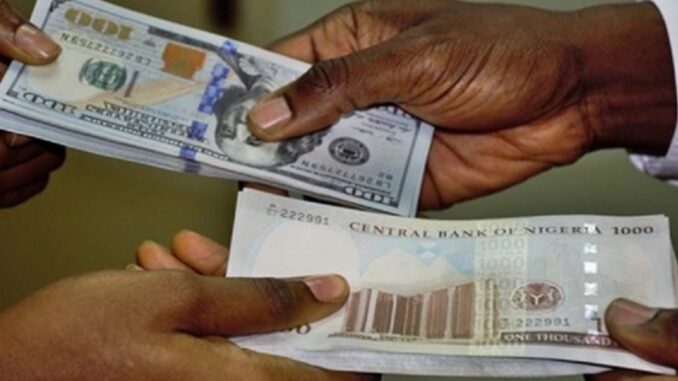
Nigeria currency news – The Nigerian foreign exchange market opened on Saturday, April 11, 2026, with the naira showing relative stability against major global currencies.
Market data indicates that the naira traded within a stable range in both the official and parallel market windows. Meanwhile, demand for foreign exchange remained moderate across major trading centres.
Below is a breakdown of today’s exchange rates in Nigeria.
Nigeria currency news: Exchange Rates Table – April 11, 2026
| Currency | Official Market Rate (₦) | Parallel / Black Market Rate (₦) | Mid-Market / Indicative Rate (₦) |
|---|---|---|---|
| US Dollar (USD) | ₦1,350 – ₦1,365 | ₦1,390 – ₦1,410 | ₦1,358 |
| Euro (EUR) | ₦1,580 – ₦1,600 | ₦1,630 – ₦1,660 | ₦1,593 |
| British Pound (GBP) | ₦1,800 – ₦1,830 | ₦1,880 – ₦1,920 | ₦1,828 |
| Chinese Yuan (CNY) | ₦188 – ₦192 | ₦195 – ₦200 | ₦190 |
| Japanese Yen (JPY) | ₦9.8 – ₦10.2 | ₦10.4 – ₦10.8 | ₦10.1 |
| Canadian Dollar (CAD) | ₦1,000 – ₦1,030 | ₦1,060 – ₦1,090 | ₦1,020 |
| Swiss Franc (CHF) | ₦1,500 – ₦1,530 | ₦1,580 – ₦1,620 | ₦1,520 |
| Saudi Riyal (SAR) | ₦360 – ₦370 | ₦375 – ₦385 | ₦368 |
| UAE Dirham (AED) | ₦365 – ₦375 | ₦380 – ₦390 | ₦372 |
Market Insight
The official exchange rate reflects transactions within the Nigerian Foreign Exchange Market regulated by the Central Bank of Nigeria. In contrast, the parallel market rate reflects Bureau de Change and retail currency trading activities.
Meanwhile, the mid-market rate serves as a global benchmark and does not include local transaction charges. Therefore, exchange rates may vary depending on location and volume.
Outlook
Analysts expect the naira to remain stable if foreign exchange supply improves. However, rising demand for dollars by importers and travelers may put pressure on the local currency in the coming days.
Stay with Sojworldnews for daily currency updates, business news, and economic insights.
Leave a Reply