
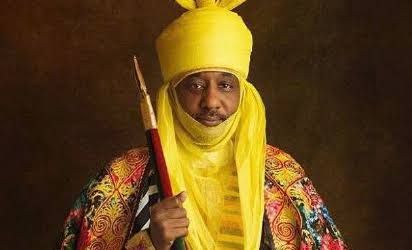
Sanusi questions Nigeria borrowing after subsidy removal – Nigeria’s former Central Bank Governor and Emir of Kano, Muhammadu Sanusi II, has again stirred national debate after questioning why the Federal Government continues to borrow heavily despite the removal of petrol subsidy.
Sanusi’s remarks come at a time when Nigerians are grappling with high inflation, rising living costs, and concerns over the country’s growing debt burden. His comments have reignited scrutiny over whether the economic sacrifices demanded of citizens are translating into stronger public finances.
Sanusi questions Nigeria borrowing after subsidy removal: Subsidy Removal Was Necessary, Says Sanusi
Speaking during a recent interview, Sanusi reiterated his long-held position that the fuel subsidy regime was unsustainable and economically damaging.
He said Nigeria could not continue to spend public funds subsidising imported petroleum products while neglecting domestic refining capacity.
“We cannot continue supporting foreign refineries,” Sanusi said.
According to him, the old subsidy system had become a fiscal trap that forced the government to borrow money simply to keep fuel prices artificially low. At one point, he noted, Nigeria was borrowing not only to fund subsidy payments but also to service the debts incurred from those payments.
Sanusi has consistently argued that subsidy on consumption encourages waste and corruption, while subsidy on production would be far more beneficial to the economy.
Sanusi questions Nigeria borrowing after subsidy removal: Domestic Refining Marks a Major Shift
The former apex bank chief praised recent developments in Nigeria’s oil sector, particularly the rise of domestic refining.
He noted that Nigeria has significantly reduced its dependence on imported petroleum products and is now exporting refined products, a shift he described as a major economic milestone.
According to Sanusi, this transition should have eased pressure on the nation’s finances and improved fiscal stability.
‘If Subsidy Is Gone, Why Are We Still Borrowing?’
That, however, is where Sanusi’s main concern lies.
He questioned why government borrowing has continued to rise despite the expected savings from subsidy removal.
“If you are not paying subsidy and you’ve got the money, why are we still borrowing?” he asked.
SEE ALSO: 2027 ELECTION: TINUBU WILL LOSE TO ME, NOT ADC COALITION – SOWORE
Lagos Was Nigeria’s Capital For 77 Years. The Full Story Of Why They Moved It Will Shock You.
He stressed that the core argument for removing subsidy was to free up resources for development, infrastructure, healthcare, education, and social investments. If those savings are not visible in public finances, he argued, then Nigerians deserve an explanation.
Call for Fiscal Discipline and Transparency
Sanusi warned that economic reforms can only succeed if they are accompanied by strict fiscal discipline, prudent spending, and transparent management of public resources.
He argued that eliminating one source of fiscal leakage while allowing unchecked borrowing defeats the purpose of reform.
“You cannot remove wastages and continue borrowing.”
He added that the real challenge is no longer simply removing distortions like subsidy or multiple exchange rates, but ensuring that the gains from those reforms are properly managed and invested.
Concerns Over Policy Sequencing
While endorsing the removal of fuel subsidy and the liberalisation of the foreign exchange market, Sanusi suggested that the reforms may not have been implemented in the ideal sequence.
He noted that exchange rate liberalisation and subsidy removal were necessary steps. However, he cautioned that failing to tighten money supply beforehand contributed to severe pressure on the naira and accelerated inflation.
This, he said, has intensified the hardship faced by ordinary Nigerians.
Rising Debt Remains a National Concern
Nigeria’s public debt has continued to climb, even as the government insists that borrowing is necessary to fund infrastructure, close budget deficits, and support economic growth.
Recent data show that debt servicing remains one of the largest drains on government revenue, raising concerns about long-term fiscal sustainability. In January 2026 alone, external debt servicing consumed over N136 billion from federation revenues.
Why Sanusi’s Question Matters
Sanusi’s intervention resonates because it goes beyond politics. It speaks directly to accountability.
Nigerians have endured the immediate pain of subsidy removal through higher fuel prices, transportation costs, and inflation. In return, they expect improved fiscal health, better public services, and reduced reliance on debt.
His question is simple but profound: if subsidy savings exist, where are they going?
Until that question is answered clearly, the debate over Nigeria’s economic reforms will remain far from settled.
Leave a Reply