
The Light of Bondi: The salt air at Bondi was warm, carrying the scent of summer and the faint, sweet smell of doughnuts from the “Chanukah By The Sea” festival. It was Sunday, December 14, 2025. Archer Park was alive with the sound of laughter—children chasing each other near the playground while parents stood in clusters, their faces illuminated by the softening golden hour light.
The Light of Bondi: Ahmed al-Ahmed, a 43-year-old fruit shop owner, wasn’t looking for a miracle that evening. He was just looking for a cup of coffee. He had walked this path a thousand times, a man who had fled the ruins of Al Nayrab in Syria to find a quiet life for his wife and two daughters in Sydney’s south. To Ahmed, the beach was peace.
Then, the world shattered.
In the light of the Bondi shooting
The first cracks of gunfire were mistaken for fireworks by some, but the screams that followed were unmistakable. Two men on the Campbell Parade footbridge had turned a celebration of light into a theater of shadow. Panic, sharp and cold, swept through the park.
CAUGHT on Camera: Brave Couple Tackle Bondi Beach Shooter Before Attack
Ahmed didn’t run away. He dropped low, his white shirt a stark contrast against the dark asphalt of the parked cars he used for cover. Nearby, he saw the chaos: families scrambling for safety, a little boy and his father cowering under the bridge, and the horrifying sight of people falling.
He saw a gunman. The man was young—later identified as Naveed Akram—and he was reloading, or perhaps his weapon had jammed.
Ahmed felt a surge of something older than his quiet life in the Sydney suburbs. It was the instinct of a man who had seen what happens when no one stands up. “I’m going to die,” he whispered to his friend, but he didn’t stay still.
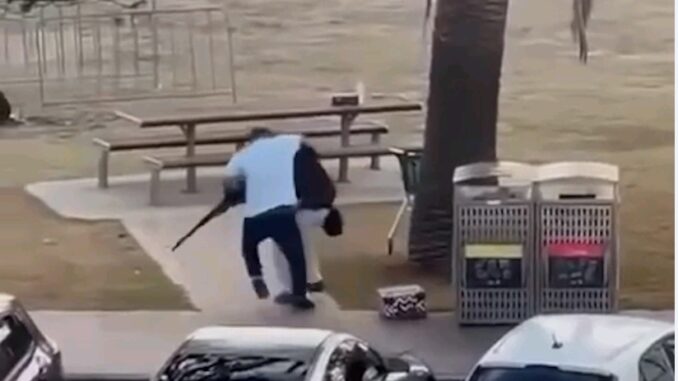
In a movement caught on viral cell phone footage that would soon stun the world, Ahmed broke cover. He charged.
He didn’t have a weapon; he had only the strength of a father. He locked the gunman in a headlock from behind, his hands—the same hands that stacked fruit every morning—now wrestling for a shotgun. The struggle was violent and desperate. As they tumbled, a second gunman opened fire from the bridge. Ahmed felt a searing heat in his leg, then another. He had been shot twice, but he refused to let go.
Bondi Beach Horror: Terror Attack at Hanukkah Event Kills 15 in Sydney WATCH VIDEO
With a final, agonizing heave, Ahmed wrenched the weapon from the attacker’s grip. The gunman, disoriented and disarmed, stumbled back. Ahmed, bleeding and gasping, didn’t use the gun. He dragged himself toward a nearby tree and leaned the seized weapon against it, ensuring it was out of reach, a silent declaration that the killing was over here.
Elsewhere in the park, other lights were shining in the darkness.
Boris and Sofia Gurman, a couple married for 34 years, had stood their ground together, trying to shield others before they were lost. Alexander Kleytman, an 87-year-old who had survived the Holocaust as a child in Europe, spent his final moments shielding his wife from the hail of bullets. They were lives built on resilience, ended in acts of final, staggering love.
As the police moved in to neutralize the threat, the silence that followed was heavy. But in the days that followed, that silence was filled by the community.
Strangers gathered at the Bondi Pavilion, laying thousands of flowers. They spoke the name of Matilda, the ten-year-old girl with the “gentle soul” who was the youngest to fall. They remembered Rabbi Eli Schlanger, the “Bondi Rabbi,” who had organized the event to spread joy and was one of the first to be taken.
In a hospital bed at St. George, propped up by pillows with his arm in a cast, Ahmed al-Ahmed received a visit from the Premier. He didn’t want the title of “national hero,” though that is what the Prime Minister called him. To Ahmed, he was a Muslim, a Syrian, an Australian, and a father. He had seen people dying, and his conscience—the “soul” his father back in Syria spoke of—simply would not let him stay behind the car.
The festival of Hanukkah is about a light that refused to go out, even when the oil was low. On that dark Sunday at Bondi, the oil was nearly gone, but the light—carried by a fruit seller, a Holocaust survivor, and a community that refused to be divided—burned brighter than the darkness could ever manage.
Leave a Reply