
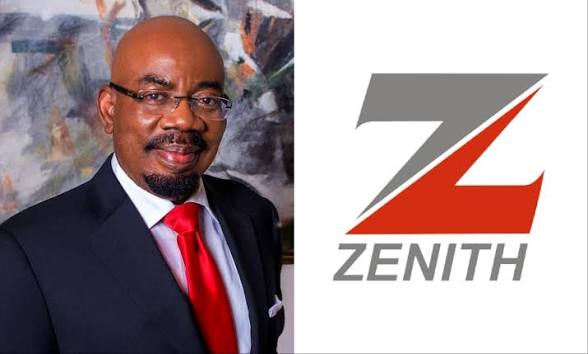
Zenith Bank Supreme Court $64 million contract – The Supreme Court of Nigeria delivered a Judgment in the case of Owigs and Obigs Nigeria Limited vs. Zenith Bank Plc (SC/CV/709/2020) on 24th May 2024. That Judgment, according to court documents and sworn admissions obtained by Journalists, may constitute one of the most brazen judicial manipulations in the nation’s commercial history.
At stake is an International Commercial Contract No: JYOONL-001/KTTA140415 for the export of columbite, tantalite and tin ores valued at over $64 Million. The deal collapsed after Zenith Bank Plc allegedly failed to confirm a Letter of Credit — despite having collected commission to do so. As it happened, the transaction was structured under the Uniform Customs and Practice for Documentary Credits (UCP 600), the global rulebook for trade finance.
The Industrial and Commercial Bank of China issued the Letter of Credit. Zenith Bank Plc was brought in as the Confirming Bank — a role that carries the legal obligation to guarantee payment to the Seller upon presentation of compliant documents. Court records show Zenith Bank admitted under oath at the FCT High Court Abuja and the Court of Appeal that it received commission to confirm the Letter of Credit.
Yet, according to the Bank’s own admission documented at paragraph 4.2.5, page 11 of the Amended Respondent’s Brief of Argument, the Bank failed to perform that confirmation. The consequence was loss by Owigs and Obigs Nigeria Limited of $42,961,739.84 in confirmed profit and default liabilities.
SEE ALSO: BANDITS: Gunmen Kidnap JAMB Candidates En Route To Exam In Benue
Zenith Bank Supreme Court $64 million contract: The Bank’s ‘Separate Deal’
What caused the breach? According to statements filed in court, top management staff of Zenith Bank allegedly demanded that trade inflows be received in local currency — Naira — rather than Dollars, a deviation from the contract terms. More troubling was that the Bank allegedly attempted to introduce an affiliate company to share profits with Owigs and Obigs outside the main contract. When Sir Emeka Donatus Okorie, Managing Director of Owigs and Obigs, rejected this arrangement, the bank became “aggrieved” and failed to confirm the Letter of Credit — collapsing the entire transaction.
Zenith Bank Supreme Court $64 million contract: The Supreme Court’s Controversial Ruling
The Supreme Court panel that heard the appeal consisted of Justices Kudirat Motonmori Olatokunbo Kekere-Ekun (now Chief Justice of Nigeria), Mohammed Lawal Garba, Ibrahim Mohammed Musa Saulawa, Tijjani Abubakar (who delivered the Lead Judgment), and Helen Moronkeji Ogunwumiju. The majority — four justices — exonerated Zenith Bank of all liabilities.
However, Justice Ogunwumiju radically dissented. She held that Zenith Bank had indeed breached the contract and awarded 500 Million Naira in general damages against the Bank for loss of the Appellant’s goodwill and further trading opportunities with the Chinese Chamber of Commerce. Her Judgment was based on Relief 8 claimed at the FCT High Court — a claim the majority allegedly ignored.
The Alleged ‘Rewriting’ of the Contract
The core of the controversy lies in what the Supreme Court’s Lead Judgment allegedly did to the contractual parties. Court documents show that Zenith Bank itself acknowledged four recognized parties: the Issuing Bank (Industrial and Commercial Bank of China), the Confirming Bank (Zenith Bank), the Buyer, and the Seller (Owigs and Obigs).
According to a detailed analysis of the Judgment obtained by this newspaper, the Supreme Court allegedly declared the Buyer a mere “third party”. The Judgment
erased the Issuing Bank from its contractual role and redefined Zenith Bank as the “Seller’s Bank” rather than its admitted role as Confirming Bank. This created a legally impossible scenario where, in practical effect, the Seller became simultaneously the Buyer, Issuing Bank and Confirming Bank — a construction that has no basis in international trade law.
The Lead Judgment reportedly stated at page 25: “The Advising or confirming Bank do not have any legal relationship with the beneficiary.” This statement directly contradicts the UCP 600 framework, under which a Confirming Bank undertakes an unequivocal obligation to honour the Letter of Credit — a direct legal relationship with the beneficiary.
What the Court of Appeal Had Said
At the Court of Appeal in Abuja (Appeal No. CA/A/1016/2016), Justice Yargata Byenchit Nimpar JSA had been unambiguous. Pages 760 and 771 of the Record of Appeal quote the Justice as stating: “It gave its consent for the issuance of letter of credit but failed to confirm it. A clear and obvious breach, which is also an act contrary to international commercial practice and the custom that no financial backing is required in trade under letter of credit. The Respondent did not act professionally and that occasioned the Appellant loss of business prospects and consequently, caused the nation a dint in its image in international commercial transactions. It is condemnable and I do so without reservation.” The Supreme Court’s majority, according to the investigative file, set this reasoning aside.
A Troubling Precedent
The implications of the defective Supreme Court’s Judgment extend beyond one company. It portrays where a Nigerian bank can admit under oath to receiving commission for a service, admit non-performance, and yet escape liability through the Supreme Court. The message to international investors is clear: contract enforcement in Nigeria is unreliable!
The transaction involved cross-border trade with Chinese counterparties. Therefore, its collapse damaged Nigeria’s commercial reputation with the Chinese Chamber of Commerce, according to court filings. Many legal luminaries advocate that the defective Judgment ought to be reversed in the interest of substantial justice.
The Supreme Court has previously affirmed its power to depart from its own decisions where those decisions perpetuate injustice. In Adegoke Motors Ltd vs. Adesanya (1989) 3 NWLR (Pt. 109) 250, the court established that principle. In 2022, the Supreme Court reversed its earlier Judgment in the Guaranty Trust Bank vs. Innoson Motors case, citing fraud and misrepresentation.
Under Order 8 Rule 16 of the Supreme Court Rules, the court can set aside its decision where it was obtained by fraud, default, deceit, where the decision was a nullity, or where the court was misled. Whether the Owigs and Obigs case meets any of these criteria is now a question the Chief Justice of Nigeria must answer as a matter of urgency.
Police Harassing Sir Emeka Donatus Okorie
As events unfold, life of the Managing Director/CEO of Owigs and Obigs Nigeria Limited, Sir Emeka Donatus Okorie, who suffered severe losses in the hands of Zenith Bank Plc, is being threatened. This innocent Nigerian has been chased out of circulation and denied his fundamental rights guaranteed under Chapter 4 of the 1999 Constitution simply because he demanded that the correct thing be done.
We have attached a letter dated 29th January 2026 and signed by ACP Magaji K. Mohammed for Head, Police Monitoring Unit, Force Headquarters. The letter invited Sir Emeka Donatus Okorie over alleged case of Criminal Conspiracy, Criminal Defamation, Cyber Bullying and Abuse of Court Process. Nigerians are worried that the Inspector-General of Police, if not properly checked, may continually donate his office to Zenith Bank agents for purpose of suppressing justice.
All parties named in this report have been given the opportunity to respond. As at press time, neither the Founder/Chaiman of Zenith Bank Plc, Jim James Ovia nor Dame Dr. Adaora Umeoji (Group Managing Director/CEO) has issued any public statement about this matter.
— sign
Emeka D. Okorie
For: Owigs and Obigs Nigeria Limited
Leave a Reply