
Section 502 loans fell far short of expectations in 2026, and Washington cannot agree on why. Critics blame February changes that capped loan amounts and added review steps. USDA, however, blames the 2025 shutdown. Meanwhile, rural families wait for answers. The dispute matters because this program helps low-income buyers purchase homes with no down payment.
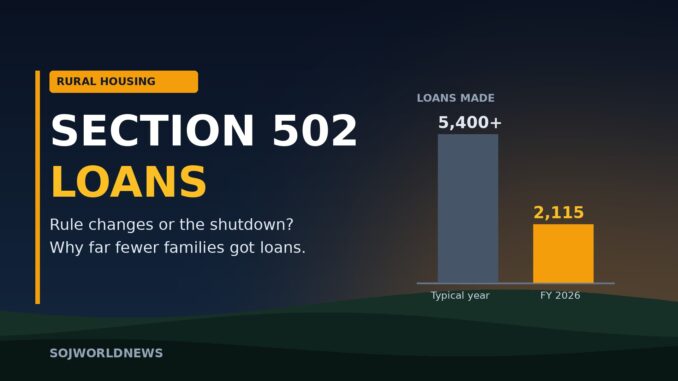
First, consider the numbers. USDA obligated $571 million for 2,115 Section 502 direct loans in fiscal year 2026, an average of about $269,000 each. In contrast, the program averaged more than 5,400 loans and $1.01 billion per year over the previous decade, according to the National Rural Housing Coalition. As a result, about $180 million of the $1 billion appropriation expired on September 30. Another $250 million carries into fiscal year 2027. In other words, USDA made fewer than 40% of the loans it typically makes in a year.
Next, look at what changed. On February 10, USDA revised its Section 502 handbook. The new rules lowered loan limits, cut packaging fees, and sent every loan through State Director review. Critics say these steps slowed the program. For example, coalition lobbyist Bob Rapoza argues the changes made the program unusable in more than 20% of rural counties. The coalition also contends that letting nearly $200 million lapse amounts to illegal impoundment. In addition, House appropriators noted that more than 1,000 applications sat on file before the handbook changes took effect. They now want monthly briefings on how many loans USDA makes and how many applications remain on hand.
USDA sees things differently. Undersecretary Glen Smith says Congress originally funded the program at $750 million, and USDA obligated 76.2% of it. Furthermore, he says the 2025 shutdown and the holidays left the agency idle for nearly three months. Without that pause, he argues, USDA would have spent every dollar. Smith also calls the administration’s record “a success story,” pointing to a delinquency rate that fell from 3.82% to 2.89%.
He also defends the tougher approach. He says the administration now scrutinizes loans more closely and teaches borrowers more about finances. In his view, borrowers who cannot repay face serious harm, because a default can wreck their credit for life. Consequently, he argues, careful screening protects both taxpayers and families.
Lawmakers have taken sides, too. In a May letter, Rep. Jim Costa and colleagues wrote that USDA should “reverse course.” Later, on September 30, they pressed Agriculture Secretary Brooke Rollins about the unspent money. Deputy Secretary Stephen Vaden answered on October 30 and defended the changes.
Now, both chambers want to act. The House’s fiscal year 2027 bill would keep the loan limit at 80% of HUD’s limit unless USDA completes formal rulemaking. Likewise, the Senate bill would block the February loan-limit changes until USDA proposes and finalizes a rule. Moreover, the Senate report calls Rural Development field offices “woefully understaffed” and adds $23 million for hiring. Smith himself acknowledges that USDA cut about 1,500 employees and now has 3,100.
So what does this mean for buyers? First, applicants should expect possible delays. Next, funding stays uncertain, because the current stopgap spending law expires on December 11. Still, the administration proposes about $983 million for fiscal year 2027, enough to finance an estimated 5,355 homes. Therefore, families should apply early and keep their documents ready. Also, they should ask their local Rural Development office whether their county’s loan limit has changed. In addition, they can ask about the guaranteed loan program, which private lenders offer when direct funds run out.
In short, both sides agree on one point: far fewer families received Section 502 loans in 2026. The argument now centers on whether policy or the shutdown caused that drop. Congress may settle the question soon. Stay with Sojworldnews for the latest US housing updates.
Leave a Reply