
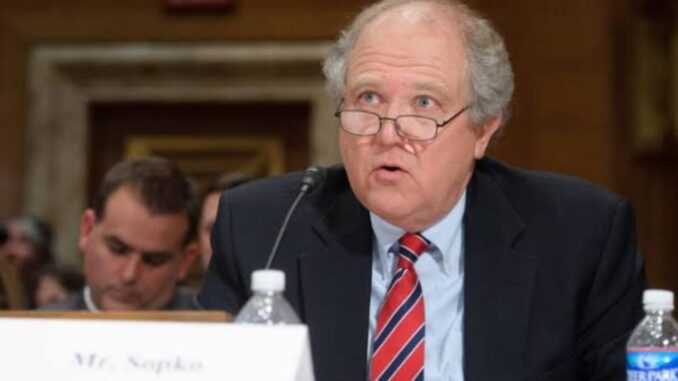
SOJWORLDNEWS | World Desk | Afghanistan five years Taliban — Five years have now passed since the chaotic US withdrawal from Kabul. Consequently, Afghanistan has become home to one of the world’s worst human rights and humanitarian emergencies. “To be very blunt, it’s hell if you’re a woman in Afghanistan,” John Sopko, the former Special Inspector General for Afghanistan Reconstruction, told CNN on Thursday.
The Taliban seized power in August 2021 as US forces withdrew after two decades of war. Since then, the group has waged a relentless assault on the rights of women and girls. Experts describe the resulting system as “gender apartheid.” Indeed, the Taliban have erased half the population from public life. As a result, Afghanistan has become one of the most dangerous places in the world to be a woman.
According to UN Women, the Taliban have issued more than 100 decrees targeting women and girls since 2021. These decrees have stripped away education, work, and freedom of movement. Notably, Afghanistan remains the only country in the world that formally bars girls and women from education beyond the primary level. UNESCO has confirmed this exclusion has already locked 2.4 million girls out of secondary school.
Meanwhile, funding cuts have compounded the crisis on the ground. Sopko specifically criticized the Trump administration for terminating nearly all USAID contracts in Afghanistan in early 2025. That decision cut off more than $1.7 billion in planned assistance. “I don’t see the international community, I definitely don’t see this government – the Trump administration – doing anything, anything at all about it,” Sopko said. “If anything, they’re creating a bigger mess for the poor people of Afghanistan.”
UN Women reports that nearly three-quarters of women-led organizations in Afghanistan experienced funding cuts in 2025 alone. Consequently, many are now struggling to keep basic services running. UN Humanitarian Coordinator for Afghanistan Bruno Lemarquis warned that these funding gaps could force health centre closures. That outcome, he said, would leave “thousands of mothers and newborns vulnerable to preventable complications and death.”
Furthermore, the World Food Programme has warned that deep funding cuts will disrupt food deliveries. This threat arrives as a hunger crisis already grips 14 million Afghans. Therefore, the humanitarian toll continues to deepen alongside the rights crisis.
Human Rights Watch has also documented threats, beatings, and sexual violence against LGBT people under Taliban rule. In addition, the organization reported arbitrary detention carried out by Taliban forces. Journalists, activists, and perceived critics of the regime have faced intimidation and torture, the group said.
Despite this record, the Taliban have not gained full international recognition. Still, cracks have started to appear. Russia formally recognized the Taliban government last year. China, meanwhile, appointed an ambassador to Kabul back in December 2023. Since then, Chinese companies have deepened their economic ties, becoming major players in Afghan oil, copper, and lithium extraction.
Sopko argued that America’s retreat carries consequences far beyond Afghanistan’s borders. “Do you think anyone is going to believe and trust the United States the next time we need allies to fight, whether it’s Ukraine, Iran, or whatever, after the way we treated the Afghans?” he asked.
Five years on, the promises that once justified two decades of American intervention remain unfulfilled. Worse still, many of those gains have since been actively undone. Women once again face mahram requirements before they can travel. They can only receive care from female medical staff, yet the Taliban have banned women from medical education entirely. This policy, experts warn, will leave Afghanistan without enough female healthcare workers to treat its own women.
Afghanistan five years Taliban | SOJWORLDNEWS will continue to follow developments in Afghanistan as the humanitarian and human rights crisis persists.
Leave a Reply