
READ ALSO: CLEMENCY: JOSEF Onoh Urges Tinubu To Reverse Pardon On Maryam Sanda, Drug Convict
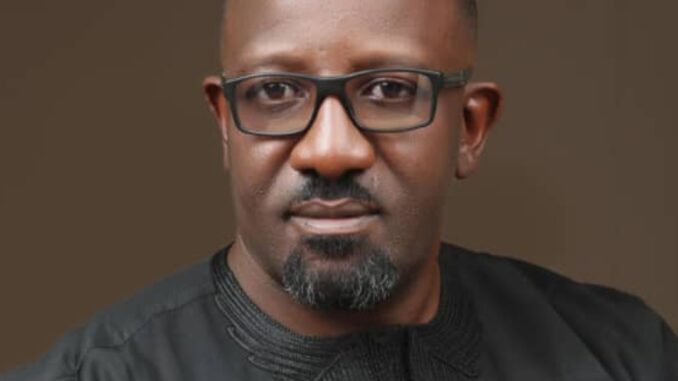
Former Southeast Spokesman Dr. Josef Onoh says the Trump administration’s new Country Of Particular Concerns, CPC designation spells trouble for Nigeria’s economy, security and global standing.
In a statement released in Abuja, former Presidential Spokesman Josef Onoh warned that President Donald Trump’s decision to place Nigeria on the “Country of Particular Concern” (CPC) list for severe religious‑freedom violations is “extremely troubling”.
The designation, announced on Truth Social and echoed by the White House, revives a painful chapter from the first Trump term and signals an existential threat to Nigeria’s stability and prosperity.
Onoh further said that while the intent to combat religious violence is noble, the collateral damage to our nation’s economy, President Bola Ahmed Tinubu’s administration, and investors—both local and international—will be catastrophic.
This is not a mere rhetoric; rather it is a clarion call for urgent introspection and action, lest Nigeria descend further into isolation and economic peril.
READ ALSO: THE Attack On Baba Akande And His Daughter Dr Ilori Is Baseless – DR (PRINCE) ADELEKE ADESOJI MASILO
Mr. President the administration must accept to an extent their failure and nonchalant approach in appointing Ambassadors considering the rush and manner they were recalled two years ago by your administration and today’s designation is an awakening to that failure.
Mr President, its important to remind you of the Devastating Impact on the Nigerian Economy,
“The CPC designation, under the International Religious Freedom Act (IRFA) of 1998, is not a symbolic slap on the wrist.
It empowers the United States government to impose a spectrum of punitive measures, including economic sanctions, restrictions on foreign aid, trade barriers, and visa limitations on officials implicated in violations.
For Nigeria, Africa’s largest economy and a nation already grappling with inflation, naira depreciation, and foreign exchange shortages, this could trigger a cascade of local and international repercussions.
Domestically, the designation will exacerbate our fragility. U.S. aid, which totaled over $1 billion annually in recent years for health, education, and security, faces suspension or redirection.
READ ALSO: RELATIONSHIP: HOW My Husband Caught Me Sleeping With My Ex-Boyfriend – WIFE
Programs combating HIV/AIDS, maternal health, and agricultural development—critical for rural communities in the Middle Belt, where much of the violence occurs—could grind to a halt, leading to heightened poverty and food insecurity. Small and medium enterprises (SMEs), which employ over 80% of our workforce, will suffer as supply chains disrupt; for instance, imported machinery and inputs from U.S. partners in manufacturing hubs like Aba and Kano could face tariffs or delays, inflating production costs by 15-20%.
Remittances from the Nigerian diaspora in the U.S., a lifeline worth $25 billion yearly, may dwindle if visa restrictions extend to families, further straining household incomes and consumer spending.
In the agricultural heartlands, where Fulani attacks have already displaced millions, investor flight could slash GDP growth projections from 3.3% to below 2%, per IMF estimates for sanctioned economies, fueling unemployment and social unrest.
Globally, Nigeria’s image as a stable investment destination will shatter. The designation amplifies perceptions of systemic risk, deterring foreign direct investment (FDI) in key sectors like oil and gas, which account for 90% of export revenues.
Multinationals such as Chevron and ExxonMobil, already cautious amid divestment trends, may accelerate exits, echoing the $10 billion in delayed projects following Nigeria’s 2020 CPC listing.
Trade under the African Growth and Opportunity Act (AGOA) could be jeopardized, with U.S. tariffs on Nigerian textiles and petrochemicals potentially rising by 10-15%, costing exporters $500 million annually.
Credit ratings from agencies like Moody’s and Fitch will likely downgrade further—from B2 to Caa1—triggering higher borrowing costs on Eurobonds and reducing access to the $3 billion in annual FDI inflows. Emerging markets like ours, reliant on portfolio investments, will see capital outflows as funds pivot to “safer” African peers like Kenya or Ghana, widening our current account deficit and pressuring the naira toward ₦2,000 per dollar.
In sum, this designation risks a 1-2% contraction in GDP over the next 18 months, compounding the economic woes inherited by your administration’s reforms and pushing millions deeper into multidimensional poverty.
Mr. President may I remind you that your administration, was sworn in amid promises of economic renewal and security overhaul, this CPC label arrives as a diplomatic thunderbolt, undermining his nascent agenda. The government, which has touted partnerships with the U.S. on counterterrorism and climate finance, now faces isolation. U.S. congressional scrutiny—evident in recent bills like H.R. 5625 calling for sanctions on complicit officials—could blacklist key figures, including security chiefs, under the Global Magnitsky Act, freezing assets and travel.
READ ALSO: YOUR Comments On Buhari And Boko Haram Lack Statesmanship – JOSEF ONOH TO JONATHAN (FOR THE RECORDS)
Political jobbers in your administration are already touting that the designation was promoted by the opposition which I can affirmatively tell you, this is false, they are also accusing Biafra promoters in diaspora which is also false, the problem was evident from the first day you assembled your cabinet and unfortunately bringing in outsiders who attacked you during the campaign calling you a drug baron and their sudden love for you was simply to create more obstacles for your administration as evident with the embarrassing outcome of the Mike Arnold, former Mayor of Blanco, Texas, saga who was brought in not to save your administration but to complicate it and truly today’s designation is a triumph for them and an awakening for you to overhaul your entire cabinet and multiple ineffective communication team.
Its important to know that this erodes executive credibility, as seen in the backlash to the 2020 designation, which strained ties and delayed $600 million in Millennium Challenge Corporation compacts.
Politically, it fractures national unity. Northern governors and Muslim stakeholders may decry it as biased, ignoring banditry’s non-sectarian roots, while southern Christian leaders demand accountability, polarizing the National Assembly.
Internationally, Your ECOWAS chairmanship—pivotal in resolving Sahel crises—loses luster, as U.S. allies like the UK and EU echo the concerns, stalling joint ventures in green energy and digital infrastructure.
Domestically, public trust in your “Renewed Hope” evaporates if aid cuts hit social programs, sparking protests akin to those over fuel subsidy removal. Ultimately, this designation hampers fiscal space for reforms, with aid shortfalls forcing austerity that could balloon the debt-to-GDP ratio beyond 50%.
Investors, the lifeblood of growth, will bear the brunt, with the CPC acting as a “red flag” in risk assessments.
Hedge funds and sovereign wealth entities from the U.S., Europe, and Asia will pull back, citing “force majeure” in contracts.
READ ALSO: DETAILS Of Military Officers Indicted For Alleged Coup Plot Against Tinubu’s Administration Out (SEE NAMES, PROFILES OF 16 MILITARY OFFICERS INVOLVED)
May I remind Mr. President, that In 2020, post-designation FDI in Nigeria’s power sector dropped 25%, and a repeat could stall $15 billion in upstream oil investments.Pension giants like CalPERS may divest from Nigerian bonds, while tech VCs—eyeing Lagos as Africa’s Silicon Valley—halt funding for startups, fearing compliance headaches under U.S. sanctions regimes.
Nigerian tycoons and diaspora returnees, channeling billions into real estate and agribusiness, will retreat to safer assets. Banks like Access and Zenith, with $5 billion in U.S. exposure, face liquidity squeezes from correspondent banking freezes, hiking lending rates to 25% and choking SME credit.
Family businesses in volatile regions like Plateau State, already hit by insecurity, will shutter, amplifying job losses in a youth-bulging population.
This investor exodus not only starves innovation but perpetuates a vicious cycle: reduced revenues mean less security spending, prolonging the very violence that invited the designation.
Finally, Mr. President, this is a fork in the road—despair or determination. The CPC is not irreversible; history shows nations like Uzbekistan shed it through targeted reforms.
Under IRFA, redesignation occurs annually, hinging on progress against “systematic, ongoing, and egregious” violations.

READ ALSO: INSIDE LIFE: FIERCEST Police Raid On Drug Dealers Hideout Leaves At Least 64 Dead
I urge a multi-pronged strategy to demonstrate unequivocal commitment, aiming for removal by the 2026 review:
1. Convene a National Religious Freedom Summit (Immediate – Q1 2026): Assemble governors, faith leaders from CAN and NSCIA, civil society, and international observers to audit violations and forge a “Peace Pact.” Publicly repudiate impunity, with timelines for prosecuting 100+ perpetrators of documented attacks, leveraging the National Human Rights Commission.
2. Bolster Security and Justice Reforms (Short-Term – 6 Months): Triple funding for community policing in the Middle Belt, integrating INTERPOL-trained units to dismantle Boko Haram networks. Enact blasphemy law amendments to prevent misuse, and establish a Religious Freedom Tribunal for swift adjudication, modeled on South Africa’s Truth and Reconciliation Commission.
3. Engage U.S. Stakeholders Diplomatically (Ongoing): Dispatch a high-level envoy—perhaps Senate President Akpabio, Bishop Hassan Kukah —to Washington for closed-door briefings with Secretary Rubio and USCIRF, presenting data-driven progress reports. Lobby African-American caucuses and evangelicals, emphasizing shared anti-terror goals, while waiving presidential actions via diplomatic assurances if needed.
READ ALSO: PROF (Prince) Adesoji Masilo Adeleke Lauds Tinubu On The Appointment, Confirmation Of Amupitan As New INEC Chairman
4. Economic Safeguards and Transparency (Medium-Term – 12 Months): Ring-fence aid-dependent programs through multilateral buffers (e.g., World Bank trust funds) and launch an Investor Confidence Initiative, offering tax incentives for FDI in non-volatile sectors. Mandate annual USCIRF-aligned reporting to build trust.
5. Grassroots Empowerment (Long-Term): Invest in interfaith education curricula and economic diversification in vulnerable regions, reducing herder-farmer conflicts via land-use policies. Partner with Open Doors and ADF International for monitoring, turning advocacy into alliance.
Mr. President, act decisively, and this crisis becomes a catalyst for renewal. Unfortunately, majority of your current cabinet composition is more Political than efficient they lack the vision to deliver especially your communication team.
Nigeria’s 200 million souls deserve a future unmarred by division or despair. The world watches—let us prove our resilience.”
CALL 08023851511 to kick-start business relationship with us for your Documentary, Advert, PR, Publicity, Awareness, Interviews, Feature Stories, Press Release/Statement, Documentary and so on.
Leave a Reply