
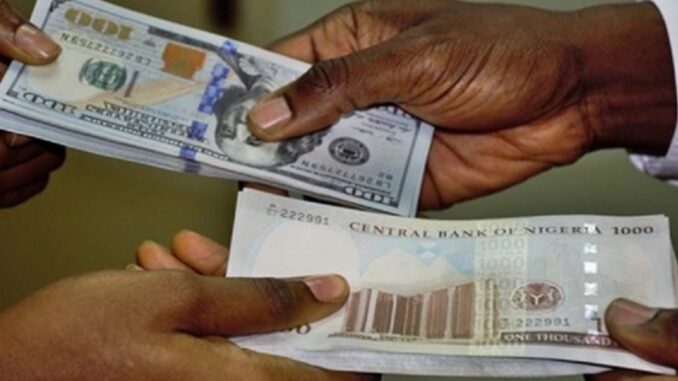
Nigeria’s currency market opened the weekend on a quiet note, and the naira largely held its ground against major foreign currencies. Meanwhile, the parallel market, widely known as the black market, kept the dollar within a tight band. According to data compiled from Bureau De Change operators and open-market aggregators, the greenback changed hands at ₦1,400 on the buy side and ₦1,412 on the sell side. Consequently, the spread between the official and unofficial windows continues to narrow, a trend the Central Bank of Nigeria (CBN) has worked to encourage since its forex unification push began.
On the official front, the Nigerian Foreign Exchange Market (NFEM) placed the dollar between ₦1,376 and ₦1,380. As a result, the gap between the CBN rate and the street rate now sits at roughly ₦30 to ₦35, which is notably tighter than the wide chasm seen in previous years. Furthermore, analysts point to improved dollar liquidity, steadier oil earnings, and stronger diaspora remittances as the main forces behind this convergence. In addition, Nigeria’s external reserves have climbed above the $51 billion mark, which has, in turn, boosted confidence among traders and BDC operators alike.
Beyond the dollar, other major currencies moved in step with broader global trends. For instance, the British pound traded between ₦1,875 and ₦1,900 on the parallel market, while the euro exchanged between ₦1,585 and ₦1,605. Similarly, the Canadian dollar hovered near ₦990, and the South African rand traded at roughly ₦84 to the naira. Given these figures, importers and travelers alike are advised to compare rates across multiple dealers before completing large transactions, since prices can shift throughout the day.
SEE ALSO: WATCH VIDEO: Makinde Says Jonathan Was Blamed for Chibok, But He’s Blamed for Oyo Abduction
WATCH VIDEO: “He Has Transformed Nigeria” — Ooni of Ife Showers Praise on Tinubu
Today’s Currency & Black Market Rate Table
| Currency | Official/CBN Rate (₦) | Black Market Buy (₦) | Black Market Sell (₦) | 24h Trend |
|---|---|---|---|---|
| 🇺🇸 US Dollar (USD) | 1,378.00 | 1,400.00 | 1,412.00 | Stable |
| 🇬🇧 British Pound (GBP) | 1,858.00 | 1,875.00 | 1,900.00 | Up |
| 🇪🇺 Euro (EUR) | 1,596.00 | 1,585.00 | 1,605.00 | Stable |
| 🇨🇦 Canadian Dollar (CAD) | 990.00 | 986.00 | 993.00 | Down |
| 🇿🇦 South African Rand (ZAR) | 84.19 | 82.50 | 86.00 | Stable |
| 🇯🇵 Japanese Yen (JPY) | 8.48 | 8.30 | 8.60 | Stable |
| 🇨🇭 Swiss Franc (CHF) | 1,703.00 | 1,690.00 | 1,715.00 | Up |
| 🇸🇦 Saudi Riyal (SAR) | 367.00 | 360.00 | 375.00 | Stable |
| 🇦🇪 UAE Dirham (AED) | 375.00 | 370.00 | 385.00 | Stable |
| 🇨🇳 Chinese Yuan (CNY) | 192.00 | 188.00 | 198.00 | Stable |
| 🇬🇭 Ghanaian Cedi (GHS) | 92.00 | 88.00 | 96.00 | Down |
| 🌍 CFA Franc (XOF) | 2.44 | 2.30 | 2.60 | Stable |
Black market rates reflect parallel/street trading reported by BDC operators in Lagos and Abuja and may vary by location, dealer, and transaction size. Rates are unofficial and change throughout the day.
Cryptocurrency Snapshot
Meanwhile, the crypto market brought a different mood entirely. Bitcoin rebounded strongly from its recent slump, climbing back above the $64,000 mark after briefly touching a 52-week low near $57,748 in late June. Ethereum also gained ground, while stablecoins such as Tether kept their peg intact. Below is a snapshot of the leading digital assets against the US dollar.
| Asset | Price (USD) | Naira Equivalent (Black Market) | 24h Change |
|---|---|---|---|
| ₿ Bitcoin (BTC) | $64,295.00 | ₦90,752,340 | +2.73% |
| Ξ Ethereum (ETH) | $1,794.00 | ₦2,533,128 | +3.05% |
| ₮ Tether (USDT) | $1.00 | ₦1,412 | Flat |
| ◎ Solana (SOL) | $78.10 | ₦110,285 | +0.80% |
| Ⓑ BNB | $569.85 | ₦804,628 | +0.38% |
| ✕ XRP | $1.10 | ₦1,553 | +0.35% |
Naira equivalents are calculated using the parallel market USD sell rate of ₦1,412. Crypto prices are highly volatile and can shift within minutes.
What This Means for Nigerians
For everyday Nigerians, the narrowing gap between the official and black market rates offers a small measure of relief. Nevertheless, the CBN continues to insist that the parallel market has no official standing, and it urges businesses and individuals to route their forex needs through licensed banks and BDC operators instead. At the same time, the recent uptick in Bitcoin’s price has reignited interest among young Nigerians who increasingly view crypto as a hedge against naira depreciation. However, financial experts caution that digital assets remain far riskier than traditional savings, so newcomers should proceed carefully and never invest more than they can afford to lose.
Looking ahead, traders expect the naira to trade within a similarly tight range next week, barring any fresh shock to oil prices or a sudden shift in CBN policy. Until then, both importers and everyday exchange-seekers are encouraged to check multiple sources before committing to a rate, since even small differences can add up on larger transactions.
KEYPHRASE: naira black market rate today.


Leave a Reply