
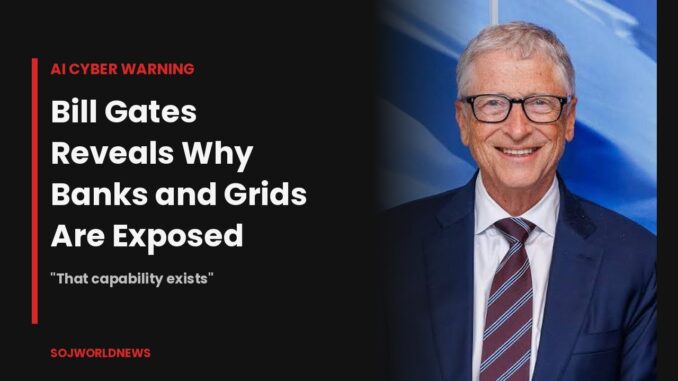
Bill Gates has issued a blunt warning about the software that runs modern life. Speaking on FT Live, the Microsoft co-founder said AI models can already find flaws in the complex systems behind electric networks and banks. Attackers, he warned, can then use those flaws to shut systems down or scramble them.
“That capability exists,” Gates said. He asked listeners to picture a red team, an attack team that receives orders to go after those targets. With the latest AI tools in hand, he said, such a team would succeed.
Gates singled out open-source models. “If they have the latest AI tools, particularly the open source where you take out all of the monitoring and safeguards, then you will be successful at those attacks,” he explained. Open-weight models let users strip out the monitoring entirely. As a result, Gates warned, “you won’t even see it coming.”
The fix will not arrive quickly. Gates said developers can use AI to rewrite the vulnerable software, but the job is “on the order of five years of work,” even if governments and companies stay diligent and make it a top priority. Meanwhile, the old code keeps running the grid, the banks and many other services people rely on every day.
Gates also tied the coming surge to money. Criminals now have a business model, he said, in which victims pay a ransom in cryptocurrency. Therefore, he expects “a dramatic increase in cyber attacks in the next few years.” The profit motive, in his view, gives attackers a steady reason to keep going.
The interview did not mark the first time Gates sounded this alarm. In an August essay, he warned that hospitals, financial institutions, water systems, power grids and government benefit systems could become prime targets. He also told ABC News that cyberattacks would likely be the area most affected by AI over the next year. In several interviews, he has stressed that people misusing the technology worry him more than any AI turning rogue on its own.
Industry leaders have echoed his concerns. Around the same time, 154 organizations signed a letter warning that AI-enabled cyberattacks will grow more widespread and sophisticated as models improve. The signatories include banks, payment companies, security vendors and cloud providers. They urged governments to fund cyber defense, starting with essential services that lack enough staff or budget. They also asked for wider access to defensive AI tools for hospitals, water utilities and local agencies.
Security analysts explain why the imbalance matters. Attackers can probe many targets at once, while defenders must protect every exposed system. Furthermore, a successful strike does not need to cause a catastrophe to hurt people. Disrupting medical services, electricity or financial networks can trigger cascading problems across entire regions.
Defenders hold some advantages as well. The same AI tools can help them find vulnerabilities and respond faster, and many security teams already use them. Still, Gates’s five-year estimate suggests a long stretch of exposure while the replacement work continues. In other words, the race between attackers and defenders has already started, and the finish line sits years away.
Gates did not point to a specific attack or a named vulnerability. His warning describes what AI can do, not an incident that has already happened. Nevertheless, the message has landed with force, because it comes from one of the most influential voices in technology and describes systems that touch nearly everyone.
For now, the takeaway is clear. Governments, banks and utilities face a narrowing window to harden their software, and Gates believes the next few years will test how well they use it.
Leave a Reply