
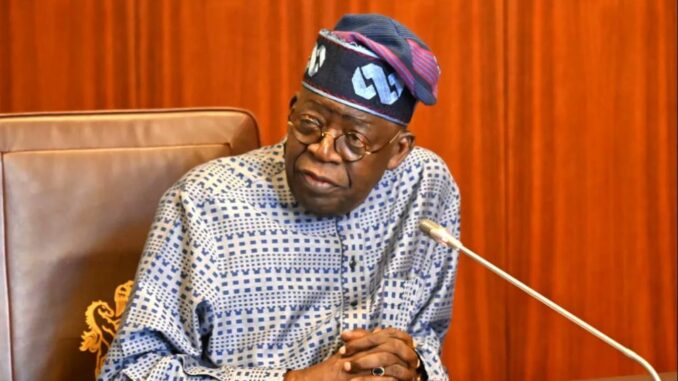
Tinubu borrowing is not leprosy – President Bola Ahmed Tinubu has defended his administration’s borrowing strategy, insisting that taking loans to fund critical national projects should not be seen as a sign of economic weakness. Indeed, he said borrowing remains a legitimate tool for national development.
Speaking on Wednesday at the Presidential Villa, Abuja, during a meeting with leaders from Plateau State, Tinubu explained that governments across the world borrow to finance strategic projects. Therefore, Nigeria should not treat borrowing as something inherently negative.
“If we have to borrow, we borrow. Borrowing is not leprosy. We just have to work hard to be able to pay for it,” the President said.
The Plateau delegation was led by Governor Caleb Mutfwang and the National Chairman of the All Progressives Congress (APC), Professor Nentawe Yilwatda.
Tinubu’s remarks come at a time when public debate over Nigeria’s rising debt profile has intensified. While many Nigerians remain concerned, the President insisted that borrowing, when properly managed, can drive economic growth.
SEE ALSO: Tragedy in Ekiti: Pastor Shot Dead as Gunmen Kidnap Worshippers During Service
How ASP Nuhu Usman Allegedly Extra-Judicially Killed 28-Year-Old Mene Ogidi in Delta
Tinubu borrowing is not leprosy: Tinubu Says Borrowing Can Drive Development
According to the President, borrowing becomes valuable when governments invest the funds in productive sectors. For instance, infrastructure, healthcare, education, agriculture, and industrial development can all benefit from strategic financing.
He stressed that the focus should not be on borrowing itself. Rather, attention should centre on how the borrowed funds are utilised.
“What matters is what you do with the money. If the funds are invested wisely in projects that expand the economy, create jobs, and improve lives, then borrowing becomes an instrument of growth,” Tinubu said.
Consequently, the administration believes that well-structured loans can help bridge infrastructure gaps and accelerate economic transformation.
Tinubu borrowing is not leprosy: Concerns Grow Over Nigeria’s Debt Profile
Nevertheless, concerns over Nigeria’s debt burden continue to mount. In recent years, the country’s public debt has risen sharply due to increased borrowing for budget support, infrastructure development, and economic reforms.
According to the Debt Management Office (DMO), Nigeria’s total public debt exceeded N159 trillion by the end of 2025. As a result, debt servicing now consumes a substantial portion of government revenue.
Many economists have warned that rising debt-servicing obligations could limit funding for critical sectors. Moreover, they argue that excessive borrowing may constrain future fiscal flexibility.
Even so, the Federal Government maintains that strategic borrowing remains necessary to fund priority projects and stimulate economic expansion.
President Reaffirms Support for Plateau State
During the meeting, Tinubu also reaffirmed his administration’s commitment to supporting Plateau State, particularly in addressing security challenges and promoting peace.
He urged political leaders, traditional rulers, and community stakeholders to work together. In addition, he emphasised that peace remains essential for sustainable development.
“Peace is the foundation of development. Without peace, meaningful progress becomes difficult,” Tinubu told the delegation.
Furthermore, the President reiterated the Federal Government’s readiness to assist victims of violence and strengthen security efforts in the state.
Mixed Reactions Follow Tinubu’s Remarks
Unsurprisingly, Tinubu’s comments have sparked mixed reactions among economists, political analysts, and citizens.
Supporters argue that borrowing is a standard global practice. In fact, many developed and emerging economies rely on debt financing to fund infrastructure and stimulate growth.
Critics, however, caution that Nigeria must borrow responsibly. They insist that the government should improve revenue generation, expand the tax base, and reduce wasteful spending.
Additionally, they have called for greater transparency and accountability in the management of borrowed funds.
Balancing Growth With Fiscal Discipline
As Nigeria pursues ambitious economic reforms, the debate over public borrowing will likely remain at the forefront. On one hand, borrowing can provide much-needed capital for development. On the other hand, poor debt management can create long-term fiscal challenges.
Ultimately, experts say Nigeria must strike a careful balance between financing growth and maintaining sustainable debt levels.
For Tinubu, however, the message remains clear: borrowing is not the problem. Instead, responsible utilisation and timely repayment are what truly matter.
“Borrowing is not a disease. What matters is responsibility, productivity, and the ability to repay,” he said.


Leave a Reply