
SEE ALSO: WATCH VIDEO: Why Did Sowore Refuse to Enter a Black Maria? Drama Rocks Abuja Court
El-Rufai’s Alleged Phone-Tapping Case Takes New Turn After Adeyanju’s Court Appearance
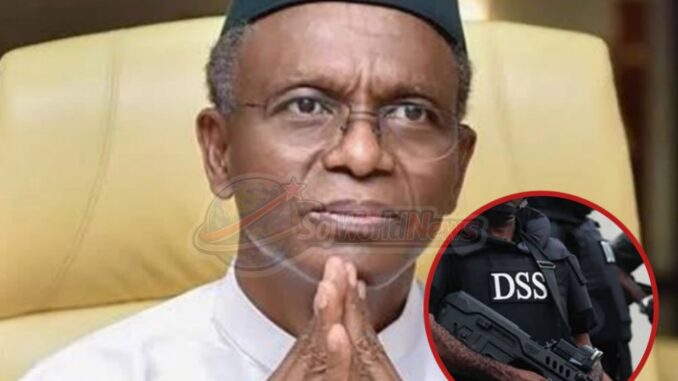
The case centres on a claim he allegedly made during a live television interview in February. He said he had knowledge of an intercepted telephone conversation involving the National Security Adviser, Nuhu Ribadu.
During the latest hearing, DSS counsel told the court that the prosecution would not call additional witnesses. The prosecution then closed its case.
That development shifted focus to the defence team. El-Rufai’s lawyers informed the court that they would file a no-case submission.
The defence argued that the prosecution failed to present enough evidence. They said the evidence does not support a prima facie case. On that basis, they asked the court to discharge the former governor.
Legal representatives said the prosecution did not clearly link El-Rufai to any unlawful interception of communications. They insisted that the evidence fails to establish key elements of the offence.
The DSS opposed the application and asked the court to proceed with the trial. Prosecutors insisted that the charges remain valid and require full judicial consideration.
The prosecution also requested time to respond to the planned no-case submission. The court granted both sides equal time to prepare written filings.
The judge gave the defence two weeks to file its application. The court also gave the prosecution two weeks to respond before adjourning the matter.
The allegations stem from a televised interview where El-Rufai allegedly referenced intercepted communications involving senior security officials. Prosecutors argue that the statement raises national security concerns.
The defence rejected that claim. El-Rufai’s lawyers said even if he made the statement, it does not prove any criminal offence. They argued that the prosecution must prove intent, method, and actual interception.
The defence also challenged the standard of proof. They said the prosecution has not met the legal threshold required to continue the trial. They added that public statements alone cannot replace evidence.
Legal analysts explain that a no-case submission allows a defendant to argue that the prosecution’s evidence is too weak to proceed. If the court agrees, it discharges the defendant. If it disagrees, the defence must open its case.
The Federal High Court will now decide whether the DSS has presented sufficient evidence. The ruling will determine whether El-Rufai enters his defence or leaves the case at this stage.
The DSS maintained that the matter involves national security. It warned that claims about intercepted communications involving top officials require serious judicial scrutiny.
El-Rufai has denied all allegations. His legal team said he stands ready to defend himself if the court rejects the no-case submission.
Public attention on the case remains high due to El-Rufai’s political profile and his past role as governor of Kaduna State. Observers say the outcome may shape future handling of surveillance-related allegations in Nigeria.
When the court reconvenes, both sides will submit written arguments. The judge will then rule on whether the prosecution has built a case strong enough to proceed.
The ruling will decide whether El-Rufai continues to trial or the court discharges him.
Broader debate around the case now focuses on national security, digital privacy, and limits on public disclosure in sensitive investigations in Nigeria.
Keyphrase: El-Rufai DSS wiretapping trial Abuja.


Leave a Reply