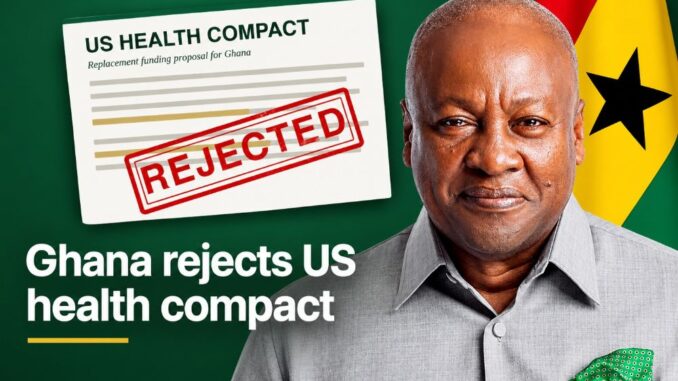
Ghana Rejects US Health Compact Over Unacceptable Conditions
President Mahama says the deal meant to replace USAID funding asked too much on data, records and drug oversight.
The first concern involved disease data. The compact says Ghana “shall give the United States a pathogen profile.” That profile would list the diseases that are endemic in the country. Mahama admitted he is no medical expert. “I’m sure there are medical experts who understand that better than me,” he said. Even so, he found the demand troubling. Disease data can reveal outbreak patterns and public health weaknesses, so governments usually guard it closely.
“Who takes another country’s medical records?”
Medical records raised a second objection. The compact also asks Ghana to hand over its records. Mahama questioned the request directly. “I mean, who takes another country’s medical records?” he asked. In his view, the clause was simply strange. Patient privacy also matters here, because health files contain deeply personal information.
Money caused a third problem. The compact requires Ghana to put up a certain amount of its own funds for healthcare. As a result, the government would commit public money under terms that Washington wrote. Mahama did not say how much Ghana would have paid.
The fourth concern targeted regulators. According to Mahama, the compact would deny the Food and Drugs Authority any right to check medicines and medical products that enter the country. Consequently, the agency could not inspect what reaches Ghanaian patients. Mahama described the clause as humiliating. Regulators normally guard the safety of every drug on the market, so many people will understand his frustration.
Cabinet acted quickly. “I’ve never seen anything thrown out as fast as that,” Mahama said. Ministers rejected the compact in record time. Afterward, the president asked the health minister to inform the US ambassador. The message was short. Ghana did not need the compact, and Ghana would manage on its own.
The package carried a large price tag. Mahama put its value at “a hundred and something million dollars.” Nevertheless, he said Ghana chose to walk away. Therefore, the country now faces a funding gap that it must fill from other sources. Mahama did not outline a replacement plan in these remarks.
The decision also raises wider questions. Other countries that relied on USAID may receive similar offers, and they may weigh the same trade-offs on data sharing and drug oversight. Meanwhile, health experts will watch closely to see how Ghana protects its clinics and patients without the promised money. Ghanaians, in turn, will expect the government to explain how it will close the gap.
The US government has not yet responded in the material available. Sojworldnews will report on any reply as soon as it arrives.
Filed under
Leave a Reply